Tampilkan postingan dengan label awards. Tampilkan semua postingan

Senin, 19 Maret 2012

VGF Nippon in Motion Award

In collaboration with the Frankfurt am Main transportation authority VGF (Stadtwerke Verkehrs-gesellschaft Frankfurt am Main), Nippon Connection 2012 is awarding the Nippon in Motion Award to the best short-short film spot for the festival.  The winning film will appear on video screens in U-Bahn stations throughout Frankfurt in the run-up to and during the festival and the winner will be awarded a cash prize of 250€.  

Everyone can participate in the voting process by going to the Nippon in Motion webpage and voting for your favourite.  The eleven finalists use a variety of techniques from stop motion animation to montage editing.  Click on the images to watch the short clips in a pop-up window.  To vote, click on the Facebook "like" icon.  The voting concludes on March 31st when the winner will be announced.

Minggu, 11 Maret 2012

Isamu Hirabayashi’s 663114 (2011)


The artistic response to the devastation wrought by the Tohoku earthquake and the ensuing tsunami and nuclear fallout at Fukushima over the past year has been immense.  The Yamagata International Documentary festival was inundated with documentaries addressing a wide range of responses to the events of March 11, 2011.  Some artists, such as TOCHKAhave become directly involved in the effort to restore a sense of normalcy to the lives of the people of the region.

One of the most profound responses to the disaster is Isamu Hirabayashi’s Noburo Ofuji Award winning animated short 663114 (2011).  The environment and the problematic nature of the relationship of human being to the environment has been a recurring theme in Hirabayashi’s experimental films from the highly allusive piece A Story Constructed of 17 Pieces of Space and 1 Maggot (2007) to the overtly political Conversations with Nature (2005).

The title looks like a code, but it is actually a collection of significant numbers.  The Fukushima disaster occurred 66 years after the dropping of the atom bombs on Hiroshima and Nagasaki.  3/11 marks the date of the Tohoku earthquake and tsunami, and 4 are the number of reactors that were damaged at Fukushima Daiichi.

On the surface, 663114, is a simple, straightforward animation, but upon closer examination one finds that it has as many layers as a tree has rings.  An ancient cicada crawls slowly up a vertical surface, which we learn through the first person narration is representative of a tree.  The tree’s surface is decorated with inkan (印鑑), the familiar red stamps that are used in lieu of signatures in Japan.  The cicada tells us that he is 66 years old, born the film implies, at the time of the atom bomb. 

In addition to being spoken aloud in a deep, guttural, masculine voice, the narration also appears in shaky, black handwritten English:

Once every 66 years,
I emerge from the ground, leave offspring and die.
Before mating,
I shed my hard shell at the risk of my life.
Our ancestors have continued this cycle countless times.
The soil of this country is very fit for us to live in.
It is free of strong pesticides and there are no landmines.
The water is delicious so the sap is delicious as well.
I will climb as high as I can.
Aiming higher and higher.
It is our natural instinct.
To survive and leave offspring.
Since the moment of shedding skin is life risking.
We choose a tree that is tall, sturdy and won’t shake that much.
Our ancestors have continued this cycle countless times.
Through the various hardships.


Though slow, the cicada’s pace is steady and its movements repetitive.  In contrast to the reassuring movements of the cicada and its narration, the music and groaning voices of the soundtrack create a growing sense of unease.  Soon, the cicada pauses and begins to moult.  Just when he is at his most vulnerable, moments after emerging from his skin, the earthquake strikes.  The vertical surfaces representing the tree are thrown off kilter, and many of the red inkan stamps go flying. 

The cicada, resilient creature that he is, has survived this initial onslaught by clinging to his shed skin.  He says that he needs to stretch his wings as soon as possible, but before he can do so the tsunami strikes.  Black waves resembling claws reach out towards the cicada and soon the screen is awash with black undulating waves.  The terror of the tsunami is expressed on the soundtrack in guttural growls and the haunting cries of voices that are suggestive of the thousands of innocent victims of this natural catastrophe.

The waves recede and the cicada, though injured, still clings on with one remaining leg to the damaged husk of his shed skin.  “I won’t die” the cicada declares, determined to survive and leave offspring as his ancestors did before him.  A buzzing sound announces the arrival of a black, inky cloud signifying the radiation from the manmade nuclear disaster. 

Black rain and deep-voiced throat singing accompany the closing credit sequence.  When the rain has passed and the credits are complete, the screen goes black and then reprises the opening credit sequence.  However this time the inkan stamps are muddled together and blurred, and the voice is no longer deep and masculine but distorted and echoing.  We hear the approach of the cicada before we see him this time, and when he appears on screen we see that he has been altered beyond all recognition by the nuclear disaster. 

I am a 66 year cicada.
Once every 66 years,
I emerge from the ground, leave offspring and die.
66 years ago, when I was born
I’ve heard that there was a big earthquake and a big tsunami.
There was also a big accident.
I will risk my life to shed this hard shell before mating.
Our ancestors have continued this cycle countless times.
The soil of this country is very fit for us to live in.
I love this country.


It is significant that Hirabayashi chose a cicada to represent the living creatures, human and otherwise, of Japan.  Insects hold a special place in the hearts of the Japanese, and the cicadas are one of the important signifiers of summer.  One cannot imagine a summer in Japan without the song of the cicadas and children delight in discovering and examining the skins of the cicadas when they moult.  It is a symbol of reincarnation, appearing metaphorically in many significant works of literature such as The Tale of Genji.  Cicadas are also a symbol of longevity as they are one of the longest living insects who spend much of their life cycle underground (normally 2-5 years). 

The film looks like a cutout film made of washi paper and ink, but Hirabayashi made it using images and textures that he found on the internet.  The inkan stamps on the surface of the tree are metaphorically significant in the film.  In Western culture, we do still use rubber stamps to make documents official, and this tradition gave rise to the English idiom “to rubber stamp” something, which is usually used to describe a bureaucrat approving something automatically without proper consideration.  In Japan, the stamp culture runs even deeper with individuals, artists, and corporations all using stamps as their signature.

When watching 663114 the first time, I was reminded of the common hanko (判子) stamp that one would use to sign for the post, or to sign into work, and I thought that each of the stamps stood for individuals affected by the disaster.  But then I realized many of the red stamps were more complex than the kind used by individuals so I contacted Hirabayashi to ask him about their significance.  Hirabayashi told me that the inkan are a metaphor for contracts [of the kind we would call “red tape” in English].  He went on to explain that after the war in Japan contracts have been given preference over the feelings of people.  In the aftermath of Fukushima, he feels that this bad attitude has risen to the surface.  

Therefore, the red stamps in 663114represent the negative force of bureaucracy, the rules that govern a society, in contrast to the enduring life force of the cicada, who struggles to survive at any cost.  It is a powerful film, and although it addresses a very specific Japanese historical moment, the universality of its message has not been lost on international festival audiences.  It received a warm reception at last year’s Viennale and it also got a special mention in the Generation Section at the Berlinale.  The jury in this division is made up of eleven children and seven teenagers.  They said of 663114:

Visuals and sound melded together flawlessly to create a philosophical and layered masterpiece. The director conveys his message, beyond all conventions. Through a simple metaphor he portrays the survival of a culture, even in the face of catastrophe. (source)


Hirabayashi used the platform to remind people around the world of the seriousness of the crisis in Fukushima: "Children are being exposed to dangerous radioactivity a year after the earthquake. It is our responsibility as Japanese adults to protect the children."

The soundtrack of the film is an artwork all of its own.  It was composed by Osaka-based sound producer Takashi Watanabe.  During the Viennale press conference for 663114, Watanabe explained that they approached the soundtrack as if it would be an offering to a temple.  He looked to Buddhism and Shintoism in his desire to create a new kind of sacred music.  Keitarō Iijima (Studio 301), the sound producer on 663114, explained that they used Japanese food for making the soundtrack including nattō (fermented soybeans), dried Japanese noodles and also cabbage.  He echoed Watanabe’s sentiments about the sacredness of the project for them, emphasizing that he tried to have a sense of respect for the food that they used throughout the production.

663114 will be screened at Nippon Connection in May.  Check out Hirabayashi’s website and youtubechannel to learn more about this fascinating filmmaker.

Director: Isamu Hirabayashi
Music: Takashi Watanabe
Throat: Hideo Kusumi
Voice: Midori Kurata
Sound Mix: Yusuke Toyoura
Sound Design: Keitao Iijima
Foley Assistant: Momoko
Art Director: Ken Murakami
Animation Assistant: Mina Yonezawa

This review is part of Nishikata Film Review’s ongoing series on Noburo Ofuji Award winners:


Film review by Catherine Munroe Hotes 2012

Jumat, 24 Februari 2012

Atsushi Wada wins Silver Bear at the Berlinale


It was been a great week for Japanese independent animation with Atsushi Wada picking up the Silver Bear at the Berlinale for Best Short Film for his latest work The Great Rabbit (グレットラビット, 2012) which was produced by the French company Sacrebleu Productions.  The Jury commented:

This dreamlike film uses a unique, surreal language to tickle our unconscious while showing us the confusion of the modern world in animated form. Using a delicate hand drawn style, Atsushi Wada decodes reality with absurd sequences of characters caught in time. (source)

The Japan Times, who have a wonderful photograph of a smiling Wada accepting the award, quoted Wada as saying “I am proud to win this award. I feel relieved because I used to think my works were rather hard to understand.” 

The film has been hand drawn frame-by-frame on paper in Wada’s signature style, which you can learn more about in my November 2010 interview with him or in my review of his CALF DVD Atsushi Wada Works 2002-2010.

Many top animators have won the Silver Bear in the past including Norman McLaren and Evelyn Lambart in 1956 for Rhythmetic, Paul Driessen in 1981 for On Land, at Sea and in the Air, and Ishu Patel in 1985 for Paradise.

Here is the official trailer for The Great Rabbit:


Isamu Hirabayashi’s beautiful animated short 663114(2011) also received a nod at the Berlinale in the Generation Section in which the jury is made up of eleven children and seven teenagers.  They said of 663114:

Visuals and sound melded together flawlessly to create a philosophical and layered masterpiece. The director conveys his message, beyond all conventions. Through a simple metaphor he portrays the survival of a culture, even in the face of catastrophe. (source)

Hirabayashi used the platform to remind people around the world of the seriousness of the crisis in Fukushima: "Children are being exposed to dangerous radioactivity a year after the earthquake. It is our responsibility as Japanese adults to protect the children."

I am proud to announce that I am curating the animation selection for Nippon Connection this year.  Atsushi Wada will be our special guest and we will have the honour of screening Hirabayashi’s 663114.


You can order Atsushi Wada's DVD from CALF (JP/EN), British Animation Awards (UK), or Heeza (FR/EN)

Jumat, 03 Februari 2012

Fear and loathing on the Oscar campaign trail


Superpac-sponsored TV spots pillorying Mitt Romney as a tax-evading French-speaking hippie have nothing on the dirty tricks campaigns being perpetrated against the front runner in the Oscars race: The Artist. Before the nominations, the negative campaigning focussed on Kim Novak's assertion that she felt "raped" by The Artist's composer, who had quoted from Bernard Hermann's Vertigo score.  This hysterical interview was pitiable as a comment on a once famous and now forgotten actress' desire to get back into the headlines by any means necessary. It was also a risible mis-reading of a film whose exact purpose is to repackage Tinseltown's history.

Post nominations, the campaign stepped up a notch. The Artist had only been surpassed by Martin Scorsese's "Hugo" in the number of noms, but this was offset by the fact that "Hugo" didn't have anyone competing in the major acting categories. Evidently Berenice Bejo wasn't going to unseat La La Land's darling, Meryl Streep, but Jean Dujardin was becoming a real threat to "Gorgeous" George Clooney, nominated for The Descendents.  The response was swift: PR agency prepared talking points urging the Academy to vote American.  Counter-publicity reminded voters that despite the nationality of the leads The Artist remained a US financed film with a US crew, US extras and US sets.

Protectionism, while unsavoury, is mild compared to the deliberately generated frenzy doing the rounds in LA this week. Campaigners have accused Dujardin of misogyny, citing posters publicising his forthcoming US film release, "Les Infideles", feature a leering Dujardin peering through a woman's long be-stockinged legs.  Once again, this is a spectacularly moronic mis-reading of the film and its poster. Loosely translated as "The Players", it's a comedy that satirises the typical boorish unreconstructed French man, rather than celebrating him. Moreover, in the nastier strains of LA gossip,  Jean Dujardin is now being equated with Dominique Strauss-Khan: the former IMF Chief infamously perp walked to prison on what turned out to be flimsy allegations of rape. In the batshit crazy logic of the negative campaign, scratch the surface of any Gallic charmer and you find a sexual harrasser.

All of this low-rent nastiness is far from edifying and stands in stark contrast with the carefully manicured conservative glamour of the Oscar ceremony itself.  That said, this contradiction works well as an analogy for Hollywood, and the wider LA media industry.  Dining at Capo in Santa Monica or Fig and Olive in West Hollywood or at Bazaar at the SLS in Beverly Hills, this week, I was shocked anew at the dangerously forced beauty of the diners putting on a show around me. They reminded me of that line in F Scott Fitzgerald's Tender Is The Night, referring to Violet McKisco "all the prettiness had been piped to the surface of her".  That's La La Land in a nutshell: a desperate and delusional battle to affect apparently effortless success.

Jumat, 27 Januari 2012

Isamu Hirabayashi’s 663114 wins the Noburo Ofuji Award


At the Mainichi Film Concours earlier this month, Isamu Hirabayashi (平林勇, b. 1973, Shizuoka) was awarded the prestigious Noburo Ofuji Award, which celebrates innovation in animation, for his latest short film 663114(2011).  I was disappointed last year that no award was given out when there are so many innovative animators working deserving of recognition by their peers. Hirabayashi is a worthy winner and I am delighted that the Mainichi saw fit to honour him.

Hirabayashi is a graduate of Musashino Art University.  He initially worked as a graphic designer after graduation, but left his job to become an independent filmmaker.  His film Textism (2003) won the Grand Prix at the Image Forum Festival and his following short films have won prizes at festivals around the world.  A Story Constructed of 17 Pieces of Space and 1 Maggot 2007) made my list of Top 40 Animated Shorts of the Noughties.  His international profile was raised in 2010 when Shikasha was invited to the Cannes’ Director’s Fortnight and last September, along with Mirai Mizue’s Modern No. 2 (2011),   663114 was invited to the Biennale in Venice.

The 8-minute short was made in response to the devastating earthquake and tsunami which struck the Tohoku region on March 11, 2011.  The story is told by a cicada (セミ) which has been gestating for 66 years.  During the press conference at the Biennale (see video), Hirabayashi explained that he chose the cicada because they when they are nymphs (newly hatched) they must live for a long time underground (usually 2-5 years, but in some species even longer).  When the nymph metamorphosizes into a full-fledged cicada, it lives for only a week.  As we all know, the earthquake of March 11 triggered many more disasters including the tsunami and the nuclear meltdowns in Fukushima.  The cicadas of the region are now living in polluted earth, and Hirabayashi feels that they represent “the destiny of Japanese people.”

Hirabayashi, an interpreter, Watanabe, and Iijima at the 68th Biennale 

The music for the film was composed by Osaka-based sound producer Takashi Watanabe.  (渡辺崇, b. 1976, Hiroshima).  He explained that they approached the soundtrack as if it would be an offering at a temple.  He looked to Buddhism and Shintoism in his desire to create a new kind of sacred music.  Keitarō Iijima (Studio 301), the sound producer on 663114, explained that they used Japanese food for making the soundtrack including nattō(fermented soybeans), dried Japanese noodles and also cabbage.  He echoed Watanabe’s sentiments about the sacredness of the project for them, emphasizing that he tried to have a sense of respect for the food that they used throughout the production.

The title is made up of the age of the cicada ‘66’ and the date of the disaster ‘3/11’, but a member of the Biennale panel is confused by the number ‘4’ at the end of the title and asks Hirabayashi to explain the logic behind it.  It turns out that the choice of 66 was not random.  Hirabayashi points out that when the disaster struck on March 11th, Japan had been rebuilding its society for 66 years after the devastation of World War II, and the number 4 refers to the four reactors that were damaged in Fukushima.

Hirabayashi was also asked to explain the meaning of the newly formed cicada that appears the black rain in 663114 as well as about the language of the cicada.  He replies that cicada that is born after the black rain, 66 years later, is polluted by radioactive rain.  Thus, the cicada is altered by the radioactivity.  The language of the cicada is artificial, but they intended for it to have a spiritual, prayer-like meaning. 

The most important message that Hirabayashi wanted to get across with the film is about the saving of children.  The children whose lives have been dramatically altered by Fukushima should be our first priority.  “This is our first prayer: to be able to save children.”

(source: BiennaleChannel)

Catherine Munroe Hotes 2012

Check out Hirabayashi’s work on his YoutubeChannel, his official website, or follow him on twitter.

Isamu Hirabayashi Filmography

Cockroach (2001, 2’)
Penis (2002, 3’)
Helmut (2003, 11’)
Textism (2003, 11’)
VS (2004, 11’)
Conversations with Nature (2005, 5’)
Doron (2006, 16’)
A Story Constructed of 17 Pieces of Space and 1 Maggot (2007, 14’)
BABIN (2008, 30’)
aramaki (2009, 26’)
Shikasha (2010, 10’)
5+ Camera (2011, 15’)
663114 (2011, 8’)


Selasa, 24 Januari 2012

On the narcissism of the Academy.....


Winning an academy award is no different from winning an election in any mature democracy. You have to a) appeal to an electorate that skews old and is conservative with a small “c” and b)  spend a ton of money on advertising.  And, just as in a normal election, the best man (read integrity, vision, talent) rarely wins.  Rather, the film that wins is typically the most banal, the least offensive, that harkens back to some mythical golden age – with Harvey Weinstein taking the role of Karl Rove, blanket-bombing DVD screeners and arranging friendly articles in the trade mags.  How else do you explain DR STRANGELOVE losing to MY FAIR LADY? The triumph of SHAKESPEARE IN LOVE and DRIVING MISS DAISY? Or BROKEBACK MOUNTAIN being snubbed?

Still, for all that, the Oscars do matter, just not as arbiters of taste. Rather, they matter because an Oscar nomination, let alone a win, undoubtedly boosts the box office of the winning films, and adds a million or so to the salary of the individual winners.  And as we here at Movie Reviews for Greedy Capitalist Bastards are all about the phat cash, it would be hypocritical not to admire someone like Harvey Weinstein who so brilliantly games the system.  Any investment banking analyst looking to corner the bonus pool could do worse than study his playbook.


Bearing all this in mind, it comes as no surprise that the Academy has narcissistically and indulgently nominated movies that are nostalgic for the history of cinema – HUGO (11 nominations); THE ARTIST (10 nominations) and MY WEEK WITH MARILYN (2 nominations) – the latter two also pimped out by Harvey.  HUGOis a particularly commercial pick, as the movie involved a respected auteur using 3D, a technology that badly needs reinvigorating and upon which the studios are depending to stymie piracy and boost ticket prices. 


It also comes as no surprise to see the Academy overlook provocative, daring, pioneering movies such as SHAME, DRIVE and TYRANOSSAUR,not to mention compelling performances from Michael Fassbender in SHAME, Albert Brooks and Ryan Gosling in DRIVE, Olivia Colman in TYRANOSSAUR,Tilda Swinton in WE NEED TO TALK ABOUT KEVIN, Vanessa Redgrave in CORIOLANUS...  And in the documentary category, where is SENNA?

The full list of nominations is below. I have underlined those that I think will win. I suspect THE ARTIST will pip HUGO at the post in the major categories, but that as with THE AVIATOR, Scorsese will be fobbed off with all the technical awards, except for a couple handed out as “end of series” commemorations to HARRY POTTER.

I haven’t bothered indicating who I think should win, as so few of the nominees would make my final cut.   Most of the people and films here are harmless. But I do find the nominations for THE GIRL WITH THE DRAGON TATTOO, THE DESCENDENTS, WAR HORSE and MONEY BALL particularly wrong-headed.  In terms of positive surprises, it was good to see Woody Allen get a directing and Best Picture nom for MIDNIGHT IN PARIS.

Overall though, one can but think this is a pretty mediocre list coloured by the Academy’s nostalgia and narcissism.  In twenty years time, I suspect the only three films that people will still be watching will be SHAME, TREE OF LIFE and A SEPARATION. The rest is just food for worms.

Best Actress in a supporting role: Bérénice Bejo, The Artist; Jessica Chastain, The Help; Melissa McCarthy, Bridesmaids; Janet McTeer, Albert Nobbs*; Octavia Spencer, The Help

Best actor in a supporting role:  Kenneth Branagh, My Week with Marilyn; Jonah Hill, Moneyball; Nick Nolte, Warrior; Christopher Plummer, Beginners*; Max Von Sydow, Extremely Loud and Incredibly Close

Best actress in a leading role:  Glenn Close, Albert Nobbs; Viola Davis, The Help; Rooney Mara, The Girl with the Dragon Tattoo; Meryl Streep, The Iron Lady; Michelle Williams, My Week with Marilyn

Best actor in a leading role: Demián Bichir, A Better Life; George Clooney, The Descendants; Jean Dujardin, The Artist; Gary Oldman, Tinker Tailor Soldier Spy; Brad Pitt, Moneyball

Best director: Michel Hazavanicius, The Artist; Alexander Payne, The Descendants; Martin Scorsese, Hugo; Woody Allen, Midnight in Paris; Terrence Malick, The Tree of Life

Best original Screenplay: The Artist; Bridesmaids; Margin Call; Midnight in Paris; A Separation

Best adapted screenplay:The Descendants; Hugo; Ides of March; Moneyball; Tinker Tailor Soldier Spy

Best foreign language film: Bullhead; Footnote; In Darkness; Monsieur Lazhar; A Separation

Best animated film:A Cat in Paris; Chico And Rita; Kung Fu Panda 2; Rango; Puss in Boots

Best picture: War Horse; The Artist; Moneyball; The Descendants; The Tree of Life; Midnight in Paris; The Help; Hugo; Extremely Loud and Incredibly Close

Art direction: The Artist; Harry Potter and the Deathly Hallows, Part 2; Hugo; Midnight in Paris; War Horse

Cinematography; The Artist; The Girl with the Dragon Tattoo; Hugo; The Tree of Life; War Horse

Costume design: Anonymous; The Artist; Hugo; Jane Eyre; W.E.

Documentary feature:Hell and Back Again; If A Tree Falls: A Story of the Earth Liberation Front; Paradise Lost 3: Purgatory; Pina; Undefeated

Documentary short subject: The Barber of Birmingham: Foot Soldier of the Civil Rights Movement; God is the Bigger Elvis; Incident in New Baghdad; Saving Face; The Tsumani and the Cherry Blossom

Film editing:  The Artist; The Descendants; The Girl with the Dragon Tattoo; Hugo; Moneyball

Sound editing: Drive; The Girl with the Dragon Tattoo; Hugo; Transformers: Dark of the Moon; War Horse

Sound mixing:  The Girl with the Dragon Tattoo; Hugo; Moneyball; Transformers: Dark of the Moon; War Horse

Visual effects: Harry Potter and the Deathly Hallows, Part 2; Hugo; Real Steel; Rise of the Planet of the Apes; Transformers: Dark of the Moon

Make up: Albert Nobbs; Harry Potter and the Deathly Hallows, Part 2; The Iron Lady

Music (original score): The Adventures of Tintin: The Secret of the Unicorn; The Artist; Hugo; Tinker Tailor Soldier Spy; War Horse

Music (original song): The Muppets; Rio

Short film (animated):Dimanche / Sunday; The Fantastic Flying Books of Mr Morris Lessmore; La Luna; A Morning Stroll; Wild Life

Short film (live action):  Pentecost; Raju; The Shore; Time Freak; Tuba Atlantic

Senin, 02 Januari 2012

Departures (おくりびと, 2008)


In the modern world we have become quite estranged from the natural process of death.  When my grandmother was growing up in rural Ontario death was accepted part of life and bodies were laid out on the dining room table to be cleaned and dressed before being laid in a simple coffin in the living room for visitation.  Today, when loved ones die strangers take care of preparing the body for funeral services.  People who work in funeral services are often stigmatized for it, as was revealed on the US program The Bachelor when a beautiful young funeral director vied for the prize.

In Japan, the stigma is even greater because of the history of people who worked with the dead being ostracized as burakumin(untouchables).  The descendants of the burakumin are still the victims of oppression in Japan and people who work with the dead still risk being stigmatized in their community as “unclean.”  Yōjirō Takita’s Oscar-winning film Departures(おくりびと, 2008) tenderly explores this issue with the tale of Daigo Kobayashi (Masahiro Motoki), a young cellist who suddenly loses his job in a Tokyo orchestra.  He decides to return to his home town in Yamagata prefecture with the support of his wife Mika (Ryōko Hirosue) to look for work.

Soon after their arrival, Kobayashi answers an advertisement in the newspaper for a company looking for someone to assist with “tabi” (旅) which he interprets as “travel”.  However, the “travel” that is meant in the ad is not to do with a physical journey but a spiritual one and Kobayashi finds himself employed as the apprentice of a man called Sasaki (Tsutomu Yamazaki) who ceremonially prepares the dead for their journey into the next life.

The pay for this work is generous so Kobayashi gives it the old college try, but it takes some getting used to and his emotional turmoil is amplified by the fact that he is afraid to tell his wife the truth about what his new job entails.  It turns out that Kobayashi is an ideal candidate for the job because he understands what it means to suffer loss.  His father walked out on his family when he was six and he missed the funeral of his mother two years earlier because he was too busy to return home.  The film follows Kobayashi’s acceptance of his new work as his vocation with warmth and depth and his story is bolstered by cleverly written subplots concerning his lost father, the family that runs the local bath house, and Kobayashi’s co-workers. 

Cinematically, the film does not really stand out from the crowd, which is why it was such a shock to many that it won the Oscar for Best Foreign Film over the Israeli animated documentary Waltz with Bashir (Ari Folman, 2008).  In terms of subject matter, it was very brave of the filmmakers to take on the taboo subject of preparing bodies for death.  The strong storyline and superb acting is complemented by the glorious location shooting in Sakata, Yamagata.  If I were still living in Japan I would be immediately planning a getaway to the region for some hill walking. I am also quite partial to the violoncello and the score by Joe Hisaishi is beautifully written and performed (available from cdjapan).

I watched the German DVD release of this film Nokan: Die Kunst des Ausklangs which has a 16 minute interview with Takita as an extra.


The DVD is also available in the US, the UK, and elsewhere.


Senin, 22 Agustus 2011

IN A BETTER WORLD


IN A BETTER WORLD is a pretentious, po-faced drama about the impotence of liberals in the face of brutality. It works by inter-weaving four examples of bullying that affect an earnest Medecins Sans Frontieres doctor called Anton (Mikael Persbrandt). 


In a medical camp in Kenya, Anton is forced to treat the savage gangster who has been brutalising the women of the village. He shows the liberals' reluctance to judge, treating the Bad Man as his Hippocratic oath demands, despite the objections of the villagers. Back in Denmark, Anton is bullied by a mechanic. Once again, Anton refuses to defend himself - literally turning the other cheek, in order to show his children that intelligence has triumphed over ignorance by refusing to stoop to its level. His words sound unconvincing. By contrast, young Christian (William Jøhnk Juels Nielsen), recently bereaved, returned to Denmark, and friends with Anton's son, Elias, puts up a more muscular response to bullying. On his first day at school, he makes a moral judgement and intervenes to help the bullied Elias. And faced with the impotence of Elias' father - an impotence Anton claims is the high moral ground - Christian once again takes matters into his own hands. 


What can we say about this film? It is well acted (particularly by the two children), beautifully photographed (DP Morten Søborg using a Red One), and moves at a swift pace. But the characters are archetypes rather than real people - they exist to make a point rather than to involve us in their distress. As a result, the emotional scenes between Christian and his father (Ulrich Thomsen) do not have the emotional power that they should. Moreover, writer-director Susanne Bier fails to create tension, so clumsily does she foreshadow her climactic scenes. I also wonder whether Bier intended to so thoroughly discredit the possibility of Liberalism in her film. And I wonder whether the Academy realised that is what this movie did when it voted it the Best Foreign Language Film of 2010. It is, of course, no such thing.


IN A BETTER WORLD won the Best Foreign Language Film Oscar in 2011, beating Biutiful, Dogtooth, Incendies and Hors de la Loi. It also won the Golden Globe for Best Foreign Film. IN A BETTER WORLD played Toronto 2010 and Sundance 2011. It was released in 2010 in Denmark, Sweden, Norway, Finland and Italy. It was released earlier this year in Hungary, Brazil, Estonia, France, Germany, Greece, Israel, Spain, the USA, the Netherlands, Portugal, Belgium, Canada, Australia, Turkey, Russia, Singapore, Poland and Argentina. It is currently on release in Japan, Ireland and the UK.


Minggu, 15 Mei 2011

Colorful (カラフル, 2010)


Suicide has been a growing concern in Japan over the past couple of decades due to a combination factors such as depression, job stress, and other societal pressures. With his latest film Colorful (カラフル, 2010), veteran animator Keiichi Hara (原 恵一, 1959), takes on the complex psychological factors behind suicide in a meaningful way.

An adaptation of a novel by Eto Mori, Colorful (Order DVD) takes us into the spiritual world of the deceased. In the west, we are familiar with the concepts of the afterlife and visitations from spirits or angels being used as a narrative device in stories such as Charles Dickens’s classic tale A Christmas Carol (1843) or Frank Capra’s perennial Christmas favourite It’s a Wonderful Life (1946). The angels or spirit guides in western fiction tend to present a Christian conception of the afterlife and offer the troubled protagonists advice on improving their circumstances so that they can become good Christians with the promise of heaven awaiting them in the next world.
Examples of Hara's photo-realism animation technique
Colorful presents the dilemma of suicide within the Buddhist conception of the afterlife in which the soul is reincarnated. The film opens with the unnamed main protagonist in a kind of in-between realm. As he has no memory of who he was on earth, he refers to himself only as “boku” (masculine form of referring to oneself). His spirit guide is a young boy with grey hair and eyes called Pura-pura who tells him that he is being given the opportunity to return to the realm of the living. A teenage boy named Makoto Kobayashi has committed suicide and his soul is just about to leave his body. The spirit of “boku” will re-enter Makoto’s body and have a limited period of time in which to discover what mistake he has made in his past life, so that “boku” may move on and enter the next life.
"Makoto" sits with his art
“Boku” struggles with understanding why Makoto Kobayashi would kill himself when he seems to have a family that loves him and a comfortable middle class home. It doesn’t take long before suggestions of intense loneliness, parental infidelity, school bullying, and the discovery of Makoto’s high school crush Hiroka’s shocking secret double life give us clues as to the turmoil that had become unbearable to young Makoto. The other clue to Makoto’s state of mind can be found in his paintings. In particular, an unfinished painting in the art club suggests that he felt submerged, and struggled towards the light.
Pura-pura, the spirit guide
Pura-pura is an unusual spirit guide by western standards because he is far from angelic. Also a boy himself, Pura-pura resorts to manipulative tactics such as provoking with words or threat of physical bulliyng in order to push “boku” in the right direction. In the end, the main protagonist must not only look within himself to find a resolution to his situation, but also learn empathy for others. The main message of the film is that people are not monochromatic, they are colourful. We may find some of these colours beautiful and others ugly, but we need to learn to accept both in order to lead happy, productive lives.

As with Hara’s other independent film Summer Days with Coo (2007), Colorful has an animation style that is unique to Hara. A lot of attention is paid to accuracy in the details of spaces such as streets locations and the interiors of homes and the school. As with Coo, I had the impression that some exterior scenes were made using a composite of photographs and animation. Hara does indeed use a full, colourful palette in the film – which is particularly striking in the scene when “boku” as Makoto goes fishing with his father and paints the autumn leaves.

It’s a beautiful film that is a must-see for teenagers in particular because it opens the door to discussions about how to overcome depression and feelings of loneliness and despair.

Colorful won the Animation Film Award at the 65th Mainichi Film Awards and was nominated for Animation of the Year at the Japanese Academy Awards.
Catherine Munroe Hotes 2011

Nippon Connection 2011

Rabu, 04 Mei 2011

Jeff Chiba Stearns wins Webby Award for Best Branded Entertainment


I was delighted to learn this evening that Yonsei Canadian animator Jeff Chiba Stearns and his company Meditating Bunny Studio has won the Webby Award for Best Branded Entertainment for 2011.

His film Ode to a Post-It Note (for 3M Canada - click on the title to watch it on youtube) beat out some pretty stiff competition from Funny or Die for their video Snoop Dogg vs LL Cool J: The Ulitmate Halo Smack Down, Digitas’s Arcade Fire UNSTAGED Pre-Show, Pererira & O’Dell’s LEGO CLICK: A Short Film, and agencytwofifteen for XBox Halo Reach - Deliver Hope.

While his competition may have had star power and strong brand recognition on their side, I believe that Jeff’s piece won because of his innovative use of stop motion animation in a way that was relevant to the product itself. I reviewed his documentary One Big Hapa Family (2010) last December, and was impressed by his combination of found materials, documentary footage, and animation.

Congratulations Jeff and I can’t wait to see your next animation/documentary project!!

One Big Hapa Family is available for international purchase on Region-Free DVD via the Official Website. It includes both the 85’ Director’s Cut and the 48’ Broadcast version. Bonus materials: One Big Hapa Family CD featuring the soundtrack by Genevieve Vincent.

Jeff Chiba Stearns Filmography
(click on links to watch the films/trailers)
2001 The Horror of Kindergarten


To learn more about the film check out:
and

Senin, 28 Februari 2011

Are the Oscars relevant to anyone but Conde Nast?

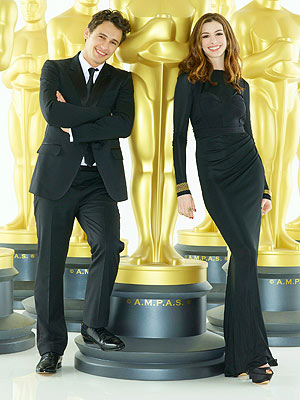
Last night, the Oscars finally jumped the shark, with a televised ceremony in which the host, James Franco, looked as bored as the audience. Because, let's be honest, the Oscars have long-since been completely irrelevant for film-goers and an endurance test for television viewers - useful only insofar as you care about haute couture trends and selling advertising space in glossy fashion magazines.

The reality is that when it comes to rewarding good Cinema, the Academy of Motion Picture Arts and Sciences has always missed the mark. This is, after all, the voting population that gave an Oscar to Dances With Wolves over Goodfellas, and to How Green Was My Valley over Citizen Kane. But at least Kane was nominated. The Academy didn't even pay that respect to The Third Man; Brazil; Mean Streets; Last Tango in Paris; Easy Rider...The list goes on: iconic films that have become part of our cultural heritage, and all of them completely over-looked by the self-appointed arbiters of quality and success. Not only does the Academy have a shocking track record in rewarding quality, but they compound errors in judgement by trying to make amends in following years, further punishing that year's worthy candidates. The classic example of this would be Martin Scorsese, serially and criminally overlooked for his masterpieces - Mean Streets, Raging Bull, Goodfellas - only to have those slights "put right" with a sort of Lifetime Achievement Award in all but name with his Best Director Oscar for The Departed in 2006. Too bad for Almodovar, whose Volver surely deserved recognition.

The cause of this shambles is threefold: age, actors and alternative votes. First off, the Academy voters are OLD. Once you are invited to join, you are eligible to vote for life, resulting in an average voting age in the late 50s. And, as ageist as this might sound, old people are inherently more conservative than young people. And in an industry where cutting edge, pioneering, radical art will be produced by the young - and mainstream blockbusters are designed to be consumed by teenage boys - the Academy voter is left out-of-touch with both art-house and mainstream sensibilities. This is why you end up with sentimental, populist pantomime like Driving Miss Daisy and The King's Speech cleaning up, while more edgy material is left unrecognised. And if one wanted to be even more damning, that's why a movie like Brokeback Mountain, featuring explicit gay sex, never stood a chance.

Second, the Academy voters - made up of the leading lights of all the industry groups that bring movies to the screen - is dominated by actors. And actors basically vote for films that contain Big Melodramatic Performances. This is a key reason why so many Serious Dramas win Best Picture while comedies - especially group ensembles - tend to be overlooked. That's why Hilary Swank won two Oscars before Sandra Bullock got a nomination - and why everyone's favourite "girl next door" actress had to choose an Issues Film before she finally got recognition. And don't even get me started on how genre films - you know - the type of movies most of us take to our hearts! - get overlooked. If the Oscars really represented the best of 2010/2011, then Toy Story 3 would've won Best Picture, not just Best Animated Feature, and Kick-Ass would've been nominated too.

The final nail in the coffin is the Alternative Vote system of voting. What basically happens is that each industry group gets to vote for its own award - so the directors vote for the Best Director and the editors vote for the Best Editor. But in the case of Best Picture, everyone can vote and they have to rank all ten (count 'em!) ten nominees. If a nominated film fails to get at least 10% of the first-choice votes, it gets knocked out, and all the people who voted for that film have their second choice added to the ballot. So goes the knock-out process until a winner emerges. What this means is that you can easily have a film win without a majority, or even a plurality of first-choice votes, so long as most people think it's basically okay and rank it somewhere in the top third of movies. And, you guessed it, that favours films that are basically pretty harmless and banal and are unlikely to offend anyone.

The upshot is that, thanks to Age, Actors and AV, the Oscars never were and likely never will be a place where great pioneering provocative cinema is awarded. But just because the awards on offer have no credibility doesn't mean that the TV show has to suck. In theory, one could imagine a scenario in which, while the awards were nonsensical, the ceremony was spectacularly entertaining. And for years this is exactly what the Golden Globes managed to pull off, with its slightly anarchic, shambolic air, fueled by too much booze and a sort of wry amusement at the anonymity of the hosts. This trend reached its apex with this year's ceremony, featuring Ricky Gervais as a kind of schlubby avenging angel, speaking Truth to Self-Appointed Power. Gervais said what everyone was thinking but didn't have the balls to say. And what's more, he said it to their faces. Never before have I seen such a glorious spectacle - such a brilliant skewering of ego. But, alas, hackles up, Hollywood is never going to allow that kind of bat-shit crazy career suicide again.

And so we ended up with the debacle that was last night's ceremony. The awards roster was, as usual, bloated with technical awards that no-one except the industry cares about (who, outside the obsessives, even knows what an Art Director does? - who even watches short features anyway?) The winners were all the odds-on favourites - The King's Speech cleaning up the main awards, Inception taking the technical awards, and The Fighter and Black Swan rounding out the roster. Even Melissa Leo's F-bomb came across as pre-scripted - her faux-naivete and excitement a calculated move to garner column inches and, hey!, I too fell for it. The only real shock was just how uninvolved James Franco looked - merely cementing his art-house credentials as the guy too busy reading Kerouac to give a damn.

And so the endless speculation about the winners is over, and the real Oscar conversation - who wore what - can begin. Glossy pictures of stars in ball-gowns will sell magazines and drive unique page-views to the TMZ. And in a world where print media is dying and advertising is leaking to the internet - where movie studios are struggling to fend off piracy - maybe we shouldn't begrudge them their annual shameless cash-in. Fine. But all I ask is that we stop pretending that the Ocars have anything to do with a real discussion about what was good and admirable in the last year's cinema.
 

reiview movies and books Copyright © 2012 -- Powered by Blogger