Tampilkan postingan dengan label clarence brown. Tampilkan semua postingan

Senin, 22 November 2010

Greta Garbo retrospective - ANNA CHRISTIE (1930) - Garbo speaks!


"If anyone wants to get drunk, if that's the only way they can be happy, and feel at peace with themselves ... they have my full and entire sympathy. I know all about that game from soup to nuts. I'm the guy that wrote the book." Hickey, in The Iceman Cometh.

ANNA CHRISTIE is a powerful and moving film about living with two emotionally destructive forces: illusions and alcoholism. It was based on a play by Eugene O'Neill, a writer who was himself an alcoholic, and who writes with an acute perception and empathy that seems utterly modern and shocking in a major MGM movie, until you realise that Anna Christie was released pre-Code. How brave, though, for silent movie star Greta Garbo to pick ANNA CHRISTIE for her first "talkie". To shatter the illusion that her fans had of her as a brittle beauty, with a movie about a woman who is herself perceived to be virginal and pure. The reality is that rather than having milk ordered for her by her father and lover, she'd rather wash away her memories of an abusive childhood and her years as a prostitute with whiskey.

The movie is a ninety minute exercise in disciplined story-telling, and the taut structure combined with director Clarence Brown's largely static camera gives the film a stagey feeling. No matter. A modern director might have tried to open the play out for the film, but with Brown - Garbo's favourite director - he was too busy opening out the emotions to care.

The first fifteen minutes sees Chris Christoffersen (George F Marion), a humble sailor, brimming with joy that his daughter, an au pair, is returning home. Marthy Owens (Marie Dressler), a bar-room drunk, and Chris' friend resents his lionising of his daughter, and is only too happy when, in the second fifteen-minute segment, Anna walks into her bar and orders, iconically, "A visky, ginger ale on the side, and don' be stingy, baby." The film comes alive as these two women edge into a friendship over a shared need to drink. Anna hints that her life has been hard and that she resents that her father abandoned her to their distant family. Marie Dressler and Garbo spark off of each other, and it's a joy to watch. In the third fifteen-minute segment, we see Anna and her father on their boat. Her father is reluctant for her to take to the sea, fearing it's no place for any proper person, but Anna, melancholy, comes to love it. And so, we sail into the second half of the movie. A storm strikes, and a fellow sailor appeals for help. So, Anna meets Matt Burke (Charles Bickford). Initially, she resists his advances, and we sense that she hates men just as her father hates the sea. But slowly they settle into a kind of domesticity on the boat and fall in love with each other. This prompts a proposal, and the final twenty minutes of the film gives us the full dramatic results of that. Anna feels she can't accept until her father and lover know the full truth about her.

This is Garbo at her best - strong, honest, upright, and yet vulnerable, damaged, self-sacrificing. Ultimately, through revealing the truth, she becomes the stronger person, leaving the men around her with their shattered illusions - literally throwing them off of her as each one grabs one of her arms as though she is a rag doll to be fought over. The irony is that she becomes strong by revealing her vulnerability - the truth about how damaged she is.

ANNA CHRISTIE is a wonderful film - raw, honest, perceptive, powerful. Garbo gives an amazing performance and dominates the screen, and Marie Dressler is fine in support. But ultimately it's O'Neill's play that is the strength of the film, with its empathy for the damaged alcoholic and its need to confess all.

ANNA CHRISTIE was released in 1930. Garbo, Clarence Brown and William H Daniels were nominated for Oscars but Norma Shearer for THE DIVORCEE, Lewis Milestone for ALL QUIET ON THE WESTERN FRONT and Joseph T Rucker and WIllard Van der Veer for WITH BYRD AT THE SOUTH POLE respectively.

Minggu, 21 November 2010

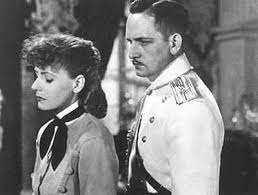
Greta Garbo retrospective - ANNA KARENINA (1935)

Anna Karenina is my favourite novel. There are novels that I think are better written, though not many, and those that I admire more. But Anna Karenina has my heart, and I read it typically twice a year. When you love a book so passionately - when you have visualised every scene and every character - it becomes incredibly hard to give another person's vision a fair viewing. And so, in general, I have avoided watching the many film and TV adaptations of the novel*. However, I have recently been rewatching a lot of Greta Garbo's films on my many train journeys to Paris, including her 1935 ANNA KARENINA directed by Clarence Brown.


Anna Karenina is a beautiful society woman who's love for her son compensates for her marriage to a staid and self-satisfied man.  She is pursued by the dashing Count Vronsky, and knowing what is at stake, refuses his advances at first. When she gives in she sacrifices her place in society and access to her son.  Worst of all, cut off from the air of society, Vronsky becomes clasustrophobic and Anna becomes insecure and paranoid with tragic consequences. This story is set against that of Anna's sister-in-law Kitty, who's heart is broken when Vronsky leaves her, but is courted by the fascinatingly ill-at-ease, philosophically mired aristocrat Levin.

This movie adaptation is just 95 minutes long and much is sacrificed to get the movie down. The story of Kitty and Levin is given very short shrift, as well as anything more dark and searching in Levin's philosophical quest. This is of particular pain to those who, like me, think that Levin is the true hero of the tale. When it comes to the story of Anna and Vronsky, Garbo is of course, perfectly cast. Her magisterial beauty makes Vronsky's reckless behaviour unsurprising, and her ability to play against that, and show deep vulnerability and doubt, is deeply affecting. It might be a cliché, but in the final scenes, when we see Anna in the extremity of suffering, one can't help thinking that only a silent movie heroine would know how to convey such complexity and depth of emotion as Garbo does.

I also rather like the direction. Brown was apparently Garbo's favourite director and he took her from silent films such as FLESH AND THE DEVIL into her first talking feature, ANNA CHRISTIE and beyond. Of what I'd seen of his earlier films, Brown was not a director with visual flair - rather leaving his camera static to observe a beautifully framed tableaux the better to fix our attention on Greta Garbo's face. But ANNA KARENINA starts with a tour-de-force scene in which he shows Count Vronsky in his element - at a lavish officer's dinner. It isn't a scene that exists in the novel, but perfectly captures the decadence of that era and the capacity for self-indulgence that Vronsky will display. It also foreshadows the tragedy that will occur when Vronsky is cut off from the oxygen of these society events. The officers are tucking in to luscious food, almost like unruly schoolchildren, and then, we realise, this has only been a starter! As they are called to dinner, the officers start singing and line up at a long banqueting table, richly laden with yet more luscious food. The camera tracks back slowly down the length of table, at food rather than officer height, and the effect is powerful and overwhelming. Truly brilliant film-making. This understanding of the fact that much of Russian high society at that time was about creating spectacle carries through into the first ball-room scene, in which a mazurka is staged. William Daniels photography is once again superb, and as we see high society indulging in emotional games in their lavish frocks, there is no mistaking that this is a David O Selznick film with all the MGM glitz and glamour that that entails.

So, there is much to like in ANNA KARENINA - Brown's visuals and Garbo's performance. But for me this can never quite be a great film because of the liberty taken with the text by screen writers Clemnece Dane and Salka Viertel (QUEEN CHRISTINA) and in particular the downplaying of Levin-Kitty as a counter-point to Anna-Vronsky. Doctor007 thinks I am being unfair on this point - and that the movie stands up perfectly well on its own terms. Maybe he is right, but I am far too enmeshed in the novel to be able to make that separation.

*Anglo-Saxon versions began with J Gordon Edwards' 1915 Anna starring Betty Nansen, Edward Jose and Richard Thornton; and Julien Duvivier's 1948 film, produced by Alexander Korda and starring Vivien Leigh as Anna, Ralph Richardson as Karenin, Kieron Moore as Vronsky with a score by Constant Lambert and a score by Cecil Beaton. More recently, Bernard Rose's 1997 Anna starring Sophie Marceau, Sean Bean, Alfred Molina, James Fox and Danny Huston.

Russian Anna's include Tatyana Lukashevich's 1953 version starring Anna Tarsova; Aleksandr Zarkhi's 1967 movie starring Tatyana Samoljlova as Anna; and Margarita Pilikhina's 1974 film, with Maya Plisetskaya as Anna and Alexander Godunov (Karl in DIE HARD) as Vronsky. German Anna's include Friedrich Zelnik's 1919 Anna starring Lya Mara and there are versions from France, Italy and Hungary from the silent era.

ANNA KARENINA played Venice 1935 where it won the Mussolini Cup for Best Foreign Film (shudder) and was released in 1935 and 1936.
 

reiview movies and books Copyright © 2012 -- Powered by Blogger