Tampilkan postingan dengan label tragedy. Tampilkan semua postingan

Sabtu, 22 Oktober 2011

London Film Fest 2011 Day 10 - TRISHNA

Freida Pinto stars as Trishna in Michael Winterbottom's loose
adaptation of Hardy's Tess of the Durbevilles.

TRISHNA is a fascinating, intelligent film about a relationship turned sour on the back of withheld secrets and unequal material power, centred on Freida Pinto's first performance of real merit. 

She plays a poor, naive village girl called Trishna - who in her society is simply a commodity to earn to support her family, and conditioned to obey. A chance meeting with a rich young man, Jay (Riz Ahmed, FOUR LIONS), prises her away from her family and strict values. They approximate the life of two lovers in the freeing atmosphere of big city Mumbai. Given the differences in their social status, it is a measure of Jay's belief that he loves Trishna, that he's willing to broach the subject of marriage, but the revelation of secrets and the return to a cloying small-town hotel serve to subtly alter their relationship, step by step, into one of master-servant, and sexual exploitation, with alarming results. 


What I loved about the film was how it was able to show the drastically increasing imbalance of power in the relationship with a few elegant, economical scenes. There is very little straightforwardly scripted dialogue. Characters' actions, positions, tell us everything. Jay is rarely shown other than supine on a chair or bed, waiting for his dinner to be served to him. Trishna seems to turn within herself, visibly shrinking as the film progresses, trapped in her material dependence on Jay and her shame at her sexual history. I also loved how writer-director Michael Winterbottom didn't feel the need to show Trishna's accusers as a gaggle of villagers or hotel workers scandalised by her situation. Her emotional distress, her shame, her sense of betrayal and entrapment, is all in her own mind, and expressed by Freida Pinto in a quiet, sensitive performance. I also loved Winterbottom's willingness to simply observe everyday Indian life - a side of India rarely shown in glitzy Bollywood movies. DP Michael Zyskind's (28 DAYS LATER) evocative images of Rajasthan and Mumbai show what can be achieved with high quality DV (in sharp contrast to yesterday's MARTHA MARCY MAY MARLENE).

That said, there are some small quibbles. In the Mumbai section, I'm not sure what the cameos of director Anurag Kashyap and actress Kalki Koechlin really add. Also, I'm not sure this film should be marketed as an adaptation of Hardy's "Tess of the Durbervilles". I spent the whole film being teased into believing that a Hardy character or situation was being introduced only to realise that Winterbottom wasn't going to take the film in that direction. His adaptation contains clever elisions and contemporarises the story intelligently. But what you end up with is a quite different beast - particularly in the character of Tess/Trishna. I would suggest that by far the best way to enjoy and appreciate this film is, then, to take it on its own terms.

TRISHNA played Toronto and London 2011.

Senin, 11 Juli 2011

THE TREE OF LIFE


This review contains spoilers.

THE TREE OF LIFE opens with a mother in an idealised 1950s American Suburbia reacting to a telegram telling her that her that her son has died. This is inter-cut with a middle-aged man in a contemporary American city - a prisoner of the sterile modern architecture that he has helped create.  We intuit that this man is her son, the elder brother of the child who died. And he too is trying to make sense of his grief - to unravel the meaning of his life and his brother's death - and to understand - on the most profound existential level - "how did I get here?"  

This opening prologue sets up both the style and themes of the movie that is to follow.  Stunning photography of the natural world set against the world that ambitious men have created. Whispered voice-overs questioning the meaning of existence - the choice between Grace and Ambition.  The audience left to intuit what is really happening - and to glory in the sensory experience.  I suspect that most viewers will know at this point whether they are going to find the film a pretentious, wilfully obscure film over-loaded with hokey spiritual themes, or a cinematic masterpiece that pushes the boundaries of narrative cinema and has an earnest engagement with spiritual matters that leaves most contemporary cinema looking superficial and banal.  I fell into the latter camp. 

And so, after its opening prologue, the film moves into its first act - the most challenging in the film and presumably the point at which many audience members walk out. Because the questioning brother, now grown-up, tries to answer his questions by taking us right back to the beginning. Not to the beginning of his brother's life, but to the beginning of life itself.  We are immersed into a twenty minute display of creation - Kubrickian visuals that are quite simply wonderful in the literal sense of that world. Writer-director Terrence Malick wants us to wonder at the glory of nature - the power and beauty of it - but also to see that the tendency toward brutality was always there - even from the time of the pre-history.  My reaction to a scene where a dinosaur holds down the head of another injured dinosaur, and then tentatively lifts up his foot, was to see this is the same questioning of grace versus brutality.  I wouldn't blame others if they thought, WTF?  

In the second act we return to 1950s suburbia, and see the birth of three sons of the family.  Brad Pitt plays the father, truly loving but also a strict disciplinarian. It is a nuanced performance and arguably the best of his career. He has a harsh self-improvement philosophy, and is feared rather than loved by his children. The mother, played by Jessica Chastain, is cast as a kind of Virgin Mary figure - loving, forgiving, gentle, a source of succour.  She looks on mournfully as she sees the father castigate the children.  And so we have embodied the battle between the Ambition and Grace. It is a battle that the father ultimately loses - his musical career and his patents come to nothing  - and they have to leave their family home in a scene that ends the second act. He admits in a voice-over that his striving has brought him nothing but estrangement from his family and disappointment. He demands kisses from his children, he knows that they hate him.  The one son he is truly proud of - who he accompanies on the piano in a marvellous scene - is killed. And the elder son, who watches this scene of intimacy from outside the window, is left resentful.  

That isn't to say that this section of the movie is depressing - there are scenes of children goofing around that made me utterly nostalgic for my own childhood - and all portrayed with an intimacy that is captivating.  The camera is typically placed at the height of a child, looking around table-legs or looking up at adults. And the mother is portrayed in one particular scene as floating in the air - just as a little kid might ideate his mother as a kind of angelic figure. It is truly beautiful. 

In the final act of the film, we move into a kind of dream world, where the questioning middle-aged son is reunited with his family from the 1950s - including his kid brother. The mother and father are overjoyed to see the little boy, it feels to anyone familiar with the Bible like a reunion in paradise. And then we have, after two hours of questioning, a scene that I found utterly cathartic - a scene in which the mother seems to accept that God has taken her son, "I give him back to you", surrounded by the supporting embrace of the people on the beach.  A lot of reviewers have criticised this scene in particular as being an unnecessary epilogue - detracting from the scenes in suburbia. But to me, this is the most crucial part of the film. Without it, we have no resolution, no closure, and the film really has been for nothing.

I am fully aware at how earnest and pretentious this review might seem. What can I say? Malick approaches his material with such a sense of wonder and goodness and earnest questioning - his films are quite without cynicism and it seems mean-spirited to approach them with anything but that same degree of earnestness.  I suspect that this unabashed, heart on your sleeve approach - this wide-eyed wonder at the beauty of nature and the goodness in the world - is what irks so many modern viewers, so used to post-modern irony and nihilism.  This is a film that comes from a time before ironic detachment. In fact, it wants us to jump into our sensory experiences, without barriers, and to really feel everything.  It is, in that sense, a truly radical, truly stunning, beautiful, graceful film. It is, to my mind, Malick's best work since Badlands, a worthy winner of the Palme D'Or, and a true pantheon film.

THE TREE OF LIFE played Cannes 2011 where it won the Palme D'Or. It was released earlier this year in France, Belgium, Italy, Switzerland, Denmark, Greece, Israel, Portugal, Sweden, the Netherlands, Bulgaria, Georgia, Russia, Ukraine, Canada, Poland, Germany, Austria, Taiwan, the Philippines and Australia. It was released this weekend in Hong Kong, Thailand, Ireland, the UK and the USA. It opens on August 12th in Japan; on August 25th in New Zealand and Finland; on September 2nd in Norway; on September 16th in Spain; on December 9th in Estonia and on December 15th in Argentina.

Selasa, 28 Juni 2011

iPad Round-Up 1 - RABBIT HOLE


RABBIT HOLE is an earnest but workman-like film about grief, adapted for the screen by playwright David Lindsay-Abaire (INKHEART) and directed in an uncharacteristically conservative manner by John Cameron Mitchell of HEDWIG AND THE ANGRY INCH and SHORTBUS fame.  The overall effect is of a sensitive and well-acted TV movie - worth watching but curiously unmemorable.

The movie stars Nicole Kidman and Aaron Eckhart as an affluent, suburban couple grieving for their son who was killed in a car accident eight months before the movie began.  Grief tests their marriage.  The wife reacts by clearing out her son's possessions, opting out of group, wanting to move house and, perhaps, most disturbingly, by striking up a friendship with her the preternaturally sensitive teen who was driving the car in the accident.  The husband seems to be much more open about his grief and rage and feels frustrated by his wife's secretive and volatile behaviour - almost tempted into an affair but with the fortitude to bend toward his wife one last time.  

Kidman got the plaudits for her performance - including an Oscar nomination - and she is just fine in her role - particularly good in a scene where she secretly returns to the City hoping to find the life she left behind only to realise it has left HER behind. But her complete shut-down restraint -  very well calibrated - makes for a sterile hole at the centre of the film, and I'm not sure the film survives it. This isn't helped by the rather flat, uninteresting work behind the screen from John Cameron Mitchell and his regular DP Frank DeMarco using a RedOne.  What saves the film is Aaron Eckhart in what is probably his best performance to date. He manages to combine great sensitivity and humour  - and in the key cathartic scene he never trips into hysterical melodrama but keeps it authentic.  It's a less showy performance as a result, and perhaps went overlooked for that reason, but it's completely emotionally devastating. 

RABBIT HOLE played Toronto 2010 and was released last year in Canada and the USA. It was released earlier this year in Sweden, Russia, Denmark, Ireland, the UK, Greece, Italy, Australia, Singapore, Finland, Serbia, Croatia, the Netherlands, Belgium, France, Turkey, Poland, Brazil, Indonesia and Argentina. It is available to rent and own.  Nicole Kidman was nominated for Best Actress at the 2011 Oscars but lost to Natalie Portman for BLACK SWAN.

Minggu, 20 Maret 2011

Random DVD Round-Up 2 - MAMMOTH


In New York a young professional couple outsource childcare to a Philippino nanny.  Sure, the surgeon-mother might get angsty that her daughter has more of an emotional relationship with the nanny than with her, but there's no real solution. Meanwhile, dad is off doing business in Thailand. We believe he really loves mum. Truly. And he's a good guy. But even he can't resist casual sex. And all the while, we cut to scenes of the Philippino nanny's kids, longing for mum to come home, and shamefully neglected by people who are too busy to care.

A decade ago, Swedish writer-director, Lukas Moodysson created a movie called LILYA 4-EVER about a young girl lured into child prostitution.  It was a movie that forced us to confront an appalling social wrong but also went beyond politics by making us empathise with Lilya in an unforgettable sustained POV shot of her being serially raped.  At the time I was shocked out of complacency and full of admiration for a movie that could make an "issues film" so visceral and unforgettable.  Unfortunately, Moodysson's latest feature, MAMMOTH, is less pure, less shocking, less affecting than LILYA 4-EVER:  with its intertwining pan-national storyline feels more like the pretentious, ponderous BABEL. 

MAMMOTH's unceasingly heavy-handed examination of the cross-national labour trade is superficial and alienating - and undermines what are actually naturalistic and believable performances from Gael García Bernal, Michelle Williams and Marife Necesito.  The tragic result is that, while I can intellectually buy into why I should be angered by the issues shown in the film, I was bored rather than engaged.

MAMMOTH played Berlin 2009 and opened that year in Sweden, Norway, Finland, the Netherlands and Belgium. It opened last year in Russia, Spain, Germany, Hungary and the UK. It opened earlier this year in Poland. It is available to rent and own.

Rabu, 24 November 2010

Greta Garbo retrospective - CAMILLE (1936)

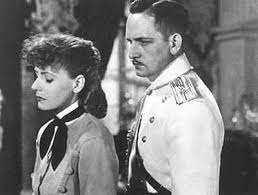
CAMILLE is one of the many adaptations of Dumas Fils La Dame Aux Cameilias - the story that became La Boheme, Rent and Moulin Rouge. This version is directed by legendary Hollywood director George Cukor (THE PHILADELPHIA STORY, MY FAIR LADY) and stars Greta Garbo as the beautiful prostitute, Margeurite aka Camille. She is kept by a wealthy baron, but because of a mix-up, turns her attention to the dashing Armand Duval (Robert Taylor - QUO VADIS) and falls in love with him. She gives up her luxurious life to be with him, but after a harsh pragmatic conversation with Armand's father, (Lionel Barrymore - IT'S A WONDERFUL LIFE), decides to abandon Armand. She knows he might follow her, but decides to sacrifice their love to save him from a life with a courtesan, and one dying of tuberculosis no less. Initially angry and disaffected, eventually Armand pursues her and comes to realise her self-sacrifice. Finally, she dies of tuberculosis in his arms, after one of the most affecting and legendary scenes of romantic declaration in the history of cinema.

The movie feels lush and romantic at every level - it's every inch an Irving G Thalberg production from the glory days of MGM. The interiors are rich and detailed, the countryside setting beautiful, and Greta Garbo's sumptuous gowns by Adrian (THE PHILADELPHIA STORY) make Garbo look even more stunningly beautiful than usual. Her hard beauty is perfectly suited to playing the woman in love whom life has taught to be practical nonetheless. When she finally melts, it's all the more moving for knowing the real risks she faces in compromising her profession. Has there ever been an actress who could portray such nuanced and conflicting emotion, barely uttering a word? And when she speaks, the dialogue might seem soupy on the page, but my goodness, it gets a little dusty in the theatre in those final scenes.

CAMILLE is one of those rare things - a romantic tragedy that never feels manipulative or melodramatic - that has the sheen of a melodrama but communicates a genuine chemistry between the leads and makes us believe in their love. It is for that reason that this seventy year old film of an eighteenth century love story still feels fresh and still moves us.

CAMILLE was released in 1937. Garbo was nominated for the Best Actress Oscar but lost to Luise Rainer in THE GOOD EARTH.

Minggu, 21 November 2010

Greta Garbo retrospective - ANNA KARENINA (1935)

Anna Karenina is my favourite novel. There are novels that I think are better written, though not many, and those that I admire more. But Anna Karenina has my heart, and I read it typically twice a year. When you love a book so passionately - when you have visualised every scene and every character - it becomes incredibly hard to give another person's vision a fair viewing. And so, in general, I have avoided watching the many film and TV adaptations of the novel*. However, I have recently been rewatching a lot of Greta Garbo's films on my many train journeys to Paris, including her 1935 ANNA KARENINA directed by Clarence Brown.


Anna Karenina is a beautiful society woman who's love for her son compensates for her marriage to a staid and self-satisfied man.  She is pursued by the dashing Count Vronsky, and knowing what is at stake, refuses his advances at first. When she gives in she sacrifices her place in society and access to her son.  Worst of all, cut off from the air of society, Vronsky becomes clasustrophobic and Anna becomes insecure and paranoid with tragic consequences. This story is set against that of Anna's sister-in-law Kitty, who's heart is broken when Vronsky leaves her, but is courted by the fascinatingly ill-at-ease, philosophically mired aristocrat Levin.

This movie adaptation is just 95 minutes long and much is sacrificed to get the movie down. The story of Kitty and Levin is given very short shrift, as well as anything more dark and searching in Levin's philosophical quest. This is of particular pain to those who, like me, think that Levin is the true hero of the tale. When it comes to the story of Anna and Vronsky, Garbo is of course, perfectly cast. Her magisterial beauty makes Vronsky's reckless behaviour unsurprising, and her ability to play against that, and show deep vulnerability and doubt, is deeply affecting. It might be a cliché, but in the final scenes, when we see Anna in the extremity of suffering, one can't help thinking that only a silent movie heroine would know how to convey such complexity and depth of emotion as Garbo does.

I also rather like the direction. Brown was apparently Garbo's favourite director and he took her from silent films such as FLESH AND THE DEVIL into her first talking feature, ANNA CHRISTIE and beyond. Of what I'd seen of his earlier films, Brown was not a director with visual flair - rather leaving his camera static to observe a beautifully framed tableaux the better to fix our attention on Greta Garbo's face. But ANNA KARENINA starts with a tour-de-force scene in which he shows Count Vronsky in his element - at a lavish officer's dinner. It isn't a scene that exists in the novel, but perfectly captures the decadence of that era and the capacity for self-indulgence that Vronsky will display. It also foreshadows the tragedy that will occur when Vronsky is cut off from the oxygen of these society events. The officers are tucking in to luscious food, almost like unruly schoolchildren, and then, we realise, this has only been a starter! As they are called to dinner, the officers start singing and line up at a long banqueting table, richly laden with yet more luscious food. The camera tracks back slowly down the length of table, at food rather than officer height, and the effect is powerful and overwhelming. Truly brilliant film-making. This understanding of the fact that much of Russian high society at that time was about creating spectacle carries through into the first ball-room scene, in which a mazurka is staged. William Daniels photography is once again superb, and as we see high society indulging in emotional games in their lavish frocks, there is no mistaking that this is a David O Selznick film with all the MGM glitz and glamour that that entails.

So, there is much to like in ANNA KARENINA - Brown's visuals and Garbo's performance. But for me this can never quite be a great film because of the liberty taken with the text by screen writers Clemnece Dane and Salka Viertel (QUEEN CHRISTINA) and in particular the downplaying of Levin-Kitty as a counter-point to Anna-Vronsky. Doctor007 thinks I am being unfair on this point - and that the movie stands up perfectly well on its own terms. Maybe he is right, but I am far too enmeshed in the novel to be able to make that separation.

*Anglo-Saxon versions began with J Gordon Edwards' 1915 Anna starring Betty Nansen, Edward Jose and Richard Thornton; and Julien Duvivier's 1948 film, produced by Alexander Korda and starring Vivien Leigh as Anna, Ralph Richardson as Karenin, Kieron Moore as Vronsky with a score by Constant Lambert and a score by Cecil Beaton. More recently, Bernard Rose's 1997 Anna starring Sophie Marceau, Sean Bean, Alfred Molina, James Fox and Danny Huston.

Russian Anna's include Tatyana Lukashevich's 1953 version starring Anna Tarsova; Aleksandr Zarkhi's 1967 movie starring Tatyana Samoljlova as Anna; and Margarita Pilikhina's 1974 film, with Maya Plisetskaya as Anna and Alexander Godunov (Karl in DIE HARD) as Vronsky. German Anna's include Friedrich Zelnik's 1919 Anna starring Lya Mara and there are versions from France, Italy and Hungary from the silent era.

ANNA KARENINA played Venice 1935 where it won the Mussolini Cup for Best Foreign Film (shudder) and was released in 1935 and 1936.

Minggu, 07 November 2010

Late review - THE ILLUSIONIST / L'ILLUSIONISTE - Will you still love a man out of time?


Sylvain Chomet is a wonderfully old-fashioned animator. He still draws his characters by hand, rather than using CGI. And he uses very little dialogue, relying instead on subtle suggestion and sight-gags. The result, in BELLEVILLE RENDEZ-VOUS, was a film full of whimsy, charm and real heart. Viewers looking for that same odd-ball humour in THE ILLUSIONIST will be wrong-footed, as I was. For THE ILLUSIONIST, while similar in technical style to BELLEVILLE, is quite different in tone. Whimsy and charm are replaced by a rather unrelentingly bleak and depressing feel, and while THE ILLUSIONIST is just 80 minutes long, it felt far longer because the material was tough and problematic.

The movie is based on a script written by the legendary French vaudevillian and film-star, Jacques Tati. Written in the late 50s, it is the script of a man painfully aware that modern culture - the creaton of the "teenager", pop idols and film-stars - was rendering Vaudeville a dying art. As M. Hulot, his supremely popular film alter-ego, Tati had shown an anachronistic man struggling to deal with modernity in a comic light. But in his script for THE ILLUSIONIST, he confronted the true tragedy of the Man Out Of Time. It is no surprise to me that Tati never filmed THE ILLUSIONIST. It is a film so full of bleak reality - so self-negating - that it feels more like a shadowy form of therapy than a realistic project. And so it fell to Sylvain Chomet to finally bring the film to screen.

THE ILLUSIONIST sees a M.Hulot magician called Tatischeff - Tati's real name - performing to small indifferent crowds in music halls now filled with teenagers screaming for pop music. He leaves Paris, and then London, in search of work, and finds himself in Mull and Iona. There, the locals are still enamoured of his tricks, although it's only a matter of time before he's obsolete there too: they applaud him, but the jukebox is being installed. So ends the pre-amble. The story really takes off when a teenage girl called Alice believes Tatischeff really is a magician, and follows him to Edinburgh. They take up together - he is perhaps trying to recreate a father-daughter relationship - and he desperately tries to maintain the illusion that he really is a magician. Tragically, the production of coins from behind her ear, or pretty dresses and shoes, requires real, degrading work that he hides from her. It is exhausting, ultimately unsatisfying, and cannot be sustained.

The film - in particular its ending - makes a number of key statements - all of which are bleak. First, vaudeville is dead:  the crowds that once laughed have discarded it and its artists most cruelly, with desperately tragic consequences. Second, vaudevillians gave happiness to others at a great price - the travelling deprived them of real personal relationships, and left them economically at the mercy of rapacious agents and fickle audiences. Third, that the illusions that once gave happiness can become a source of dangerous delusion, enabling a deeply damaging relationship. By the end of the film Tatischeff has realised this - all of this. Little Alice will have to struggle with these lessons after the film ends.

Maybe if I'd been better primed I would have liked THE ILLUSIONIST more. I love the idea of exploring tragedy through animation. But even if I had been warned, and as much I appreciate the intention of the film, I still found it deeply problematic. The relationship between Tatischeff and Alice seemed to me sinister. It wasn't clear to me that she really thought the money appeared my magic. Rather, that she was simply playing him for money. Was she really so self-involved that she couldn't see what it was costing him? And if he could really magic money for clothes and shoes why wouldn't he magic money for rent in a better lodgings? Alice is either stupid or conniving - either way - a gaping hole where empathy should be at the heart of the film. Or maybe that was intentional? Maybe Tati wanted to show that Alice was just another example of fickle youth screaming for pop? Hard to square this with Chomet's contention that Alice is a stand-in for Tati's real-life daughter Sophie. Stylistically, I also thought there were some mis-steps. I loved the attention to detail in recreating 1960s Edinburgh, but why break the beautifully hand-drawn world? There is a scene where Tatischeff releases his white rabbit into the wild and the camera lifts up and gives us a whirling panoramic aerial view of Edinburgh. It's stunning, but it feels very CGI and quite out of keeping with the rest of the film.

Overall, then, I found THE ILLUSIONIST to be a bleak, often dull, and problematic in terms of the central relationship, and occasionally the technique. A great disappointment, and greater still because the central ideas are so powerful.

THE ILLUSIONIST played Berlin, Telluride and Toronto 2010 and was released earlier this year in France, the Netherlands and the UK. It opens in Turkey on October 29th; in Italy on December 3rd; and in the USA on Christmas Day.

Jumat, 15 Oktober 2010

London Film Fest 2010 Day 3 - EVERYTHING MUST GO


You lose your job. You come home. Your wife has locked you out of your house, left your belongings on the front lawn and asked for a divorce. What do you do? If you're Nick Halsey, you drink beer, you order take-out, you shower with a hose and start a yard sale, largely to pass the time. You strike up a friendship with the nice pregnant lady across the street, you ask your neighbours to throw you some electricity, and you play ball with a young bored kid. Maybe you even start to think about your life - about the alcoholism that has landed you in this situation - and try to reconnect with an old high school friend. But there are no easy answers.

It's a great movie set-up, and Dan Rush's debut feature, based on a short story by Raymond Carver, is a quiet, sympathetic little movie. Will Ferrell, in the lead role, gives a muted, restrained performance that is convincing and charming. He is ably supported by Rebecca Hall, Laura Dern and, in particular C J Wallace as the little kid. I like that Rush/Carver give the alcoholic no easy wins - this isn't that kind of film. But, still, this movie has a sort of Hollywood sheen to it - a warm glow - that was entirely subverted in another low-key film - CYRUS. During the movie, I really did care about what happened to the lead character. But once the lights came up, it was utterly forgettable. There wasn't enough bite to it - or enough content to sustain the run-time. Apparently this movie started off as a short-film, and I couldn't help but wonder if that was the best format for this novella turned movie.

EVERYTHING MUST GO played Toronto and London 2010. It doesn't yet have a commercial release date.

London Film Fest Day 2010 Day 3 - SILENT SOULS


Aleksei Fedorchenko's SILENT SOULS is a breath-takingly brilliant movie. Miron (Yuriy Tsurilo) is burying his wife Tanya (Yuliya Aug) with the help of his employee and friend Aist (Igor Sergeyev). He is doing so according to the mystical funeral rites of the Merjan people, a Finnish ethnic group based in Western Russia. As he does so, Miron shows us his love for Tanya, taking us into the intimate details of their lives together. And Aist, in his beautiful narration, gives us a heart-felt lament not just for a love that no longer exists, but for a culture and ethnicity that no longer exists. It's as though, in committing Tanya to the water, they are saying goodbye to the Merjan culture itself.

The movie is quiet, melancholy and beautiful. Cinematographer Mikhail Krichman uses CinemaScope to immerse us in the landscape and Andrei Karasyov's score centres us in the folk music of the area.There are many scenes that feel strange and surreal. The overall effect is one of a hypnotic lament.  I often find it hard to describe films that I have a strong emotional reaction to - to break down exactly why I love a film so much. It's far easier to criticise. So all I can do is exhort you to see this film - and if possible on a big screen. It's truly a pantheon film of the future.

Additional tags: Aleksei Fedorchenko, Denis Osokin, Yuliya Aug, Igor Sergeyev, Vikto Sukhurukov, Yuriy Tsurilo, Andrew Karasyov, Mikhail Krichman, Sergei Ivanov

SILENT SOULS played Venice 2010. It does not have a commercial release date yet.

Senin, 11 Januari 2010

Douglas Sirk Retrospective 2 - ALL I DESIRE

We're a big disappointment to each other, aren't we? You've got a mother with no principles; I've got a daughter with no guts.


Continuing with the Douglas Sirk retrospective, we have his 1953 melodrama, ALL I DESIRE. In a theme that Sirk would explore most famously in IMITATION OF LIFE, Sirk shows the price paid by a woman who sacrifices her family to her career, and who later is positioned as a rival to her daughter. Barbara Stanwyck stars as the classic Sirkian heroine, a woman who has made a break for freedom and personal happiness, by leaving her decent but dull schoolteacher husband, her three children and her possessive lover, to pursue a career on the stage. A decade later she returns, to find her grown daughter about to graduate, and her family convinced she has made it as a big star. As with all Sirkian heroines, she is forced to sacrifice and subsume her passions in order to make her judgemental family happy. This is the genius of Sirk - on the face of it, ALL I DESIRE is a deeply conservative morality tale in which a malcontent runs from her responsibilities, returns home with her tail between her legs, realises that she really wants her dull husband and settles down to her dull life. But in reality, it is a film about the invisible constraints of suburbia - the malicious force of small-town gossip - and settling for less than you wanted through exhaustion and desperation. The resolution is less a happy ending than a resigned return to repression. It is a tremendous film - and all the more astounding because it is examining the dilemma of MAD MEN's Betty Draper on screen at the time at which it was *actually* happening, right in front of an audience who think they're in for some populist sentimental nonsense.

ALL I DESIRE was released in 1953.

Selasa, 27 Oktober 2009

London Film Fest Day 14 - A SERIOUS MAN

A SERIOUS MAN is being marketed as the new black comedy from the Coen Brothers. But I found this movie absolutely excruciating to watch. Not because it's badly made. It would be hard to find a movie that has better production values, better lead performances, a more tightly written script or a more brilliant visual style. No, I found this film tough going because it essentially take a nice man, Larry Gopnik, and hurls abuse at him for two hours. I could see, in the abstract, that a lot of the dialogue and situations made for good black comedy. And I could hear the rest of the audience laughing. But I was just so over-powered with such a bleak vision of humanity that I couldn't laugh. In fact, I could barely sit through it. This is, without doubt, one of the most depressing, most depressed, and most sadistic film I have seen.

The story is simple. You take a nice middle-aged, middle-class guy living in a suburb in the 1960s. He has a wife and two kids and he's going for tenure at his university. And then, for two hours, you make his life crumble. His wife leaves him for a guy who is smug and patronising. His kids treat him as a cash-register/TV fixer. His students try to bribe him for better grades. Someone is writing slanderous letters to his tenure committee. His neighbours are taking over his garden. But Larry is a good Jewish man, and he wants to be a serious man, who takes these issues in a thoughtful calm manner. So he turns to Rabbis, and they just give him crappy advice - meaningless stories that give no hope or insight. It's even worse: he takes comfort in his son completing his Bar Mitzvah successfully but in reality it's a sham - his son was stoned. And in the final scenes, my interpretation is that the ending is incredibly bleak - we are all basically insignificant and buffeted by the elements/God.

So, I can see how some will laugh at these situations. The writing is funny, in theory. Fred Melamed, in particular, is genius as the oleaginous lover, Sy Abelman. David Kang is also funny as the Korean student Clive. But I found this movie really depressing. I took the message that life is basically cruel; humanity is dumb and selfish; and that the stories in the film and by extension, radically, the story that is the film, are ultimately pointless.

A SERIOUS MAN played Toronto 2009 and is currently on release in the USA, Denmark and Norway. It opens on November 6th in Italy and on November 20th in Australia, Iceland, Sweden and the UK. It opens in Russia on November 26th. It opens in Argentina and Finland on December 3rd. It opens on January 20th in Belgium, France, Germany and the Netherlands.

Selasa, 20 Oktober 2009

London Film Fest Day 7 - EYES WIDE OPEN


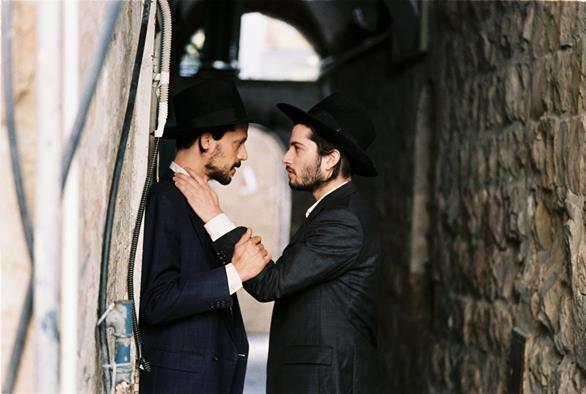
EYES WIDE OPEN is Haim Tabakman's immensely impressive and brave debut feature about the difficulty of reconciling a private life within a community of strict orthodoxy. To be sure, Tabakman has explored this issue by depicting a homosexual love affair within an Orthodox community in Jerusalem, but the issues would apply equally to, say, young girls threatened with "honour" violence in the UK, or, say, gays in the Catholic church. This is a film about people who cannot simply cut the ties from the communities who reject them and flee to a more tolerant place, but want to live out both their private life and their faith. The inability to choose on or the other is the tragedy.


The movie succeeds because it is resolutely NOT sensationalist but actually rather quiet and introspective and intimate. Zohar Strauss plays a butcher who is playing a role in his father's butcher's shop and as a husband and father. He seems to be a genuinely kind man, and a man of faith. He falls for a handsome young man (Ran Danker) who has already been expelled from one religious community. Aaron is warned by the Rabbi and more menacingly by a self-appointed group of young men. There is a particularly beautiful shot where the two are arguing in front of the shop about whether the relationship is tenable. A van pulls away and in the reflection we see that this whole argument has taken place in front of the menacing youths. And at the same time, the story is widened out, to show a young girl acquiesce to an arranged marriage.

This really is a powerful, sensitive relationship drama that shows a situation that is more widely relevant that a reductive plot summary might suggest. It is not at all sensationalist or exploitative, but authentic, credible, well-acted and well-photographed. It deserves to be widely seen.

EYES WIDE OPEN / EYNAIM PEKUKHOT played Cannes and Toronto 2009 and opened in September in France and Israel. It opens in Belgium on December 2nd.


reiview movies and books Copyright © 2012 -- Powered by Blogger