Tampilkan postingan dengan label pantheon. Tampilkan semua postingan

Senin, 11 Juli 2011

THE TREE OF LIFE


This review contains spoilers.

THE TREE OF LIFE opens with a mother in an idealised 1950s American Suburbia reacting to a telegram telling her that her that her son has died. This is inter-cut with a middle-aged man in a contemporary American city - a prisoner of the sterile modern architecture that he has helped create.  We intuit that this man is her son, the elder brother of the child who died. And he too is trying to make sense of his grief - to unravel the meaning of his life and his brother's death - and to understand - on the most profound existential level - "how did I get here?"  

This opening prologue sets up both the style and themes of the movie that is to follow.  Stunning photography of the natural world set against the world that ambitious men have created. Whispered voice-overs questioning the meaning of existence - the choice between Grace and Ambition.  The audience left to intuit what is really happening - and to glory in the sensory experience.  I suspect that most viewers will know at this point whether they are going to find the film a pretentious, wilfully obscure film over-loaded with hokey spiritual themes, or a cinematic masterpiece that pushes the boundaries of narrative cinema and has an earnest engagement with spiritual matters that leaves most contemporary cinema looking superficial and banal.  I fell into the latter camp. 

And so, after its opening prologue, the film moves into its first act - the most challenging in the film and presumably the point at which many audience members walk out. Because the questioning brother, now grown-up, tries to answer his questions by taking us right back to the beginning. Not to the beginning of his brother's life, but to the beginning of life itself.  We are immersed into a twenty minute display of creation - Kubrickian visuals that are quite simply wonderful in the literal sense of that world. Writer-director Terrence Malick wants us to wonder at the glory of nature - the power and beauty of it - but also to see that the tendency toward brutality was always there - even from the time of the pre-history.  My reaction to a scene where a dinosaur holds down the head of another injured dinosaur, and then tentatively lifts up his foot, was to see this is the same questioning of grace versus brutality.  I wouldn't blame others if they thought, WTF?  

In the second act we return to 1950s suburbia, and see the birth of three sons of the family.  Brad Pitt plays the father, truly loving but also a strict disciplinarian. It is a nuanced performance and arguably the best of his career. He has a harsh self-improvement philosophy, and is feared rather than loved by his children. The mother, played by Jessica Chastain, is cast as a kind of Virgin Mary figure - loving, forgiving, gentle, a source of succour.  She looks on mournfully as she sees the father castigate the children.  And so we have embodied the battle between the Ambition and Grace. It is a battle that the father ultimately loses - his musical career and his patents come to nothing  - and they have to leave their family home in a scene that ends the second act. He admits in a voice-over that his striving has brought him nothing but estrangement from his family and disappointment. He demands kisses from his children, he knows that they hate him.  The one son he is truly proud of - who he accompanies on the piano in a marvellous scene - is killed. And the elder son, who watches this scene of intimacy from outside the window, is left resentful.  

That isn't to say that this section of the movie is depressing - there are scenes of children goofing around that made me utterly nostalgic for my own childhood - and all portrayed with an intimacy that is captivating.  The camera is typically placed at the height of a child, looking around table-legs or looking up at adults. And the mother is portrayed in one particular scene as floating in the air - just as a little kid might ideate his mother as a kind of angelic figure. It is truly beautiful. 

In the final act of the film, we move into a kind of dream world, where the questioning middle-aged son is reunited with his family from the 1950s - including his kid brother. The mother and father are overjoyed to see the little boy, it feels to anyone familiar with the Bible like a reunion in paradise. And then we have, after two hours of questioning, a scene that I found utterly cathartic - a scene in which the mother seems to accept that God has taken her son, "I give him back to you", surrounded by the supporting embrace of the people on the beach.  A lot of reviewers have criticised this scene in particular as being an unnecessary epilogue - detracting from the scenes in suburbia. But to me, this is the most crucial part of the film. Without it, we have no resolution, no closure, and the film really has been for nothing.

I am fully aware at how earnest and pretentious this review might seem. What can I say? Malick approaches his material with such a sense of wonder and goodness and earnest questioning - his films are quite without cynicism and it seems mean-spirited to approach them with anything but that same degree of earnestness.  I suspect that this unabashed, heart on your sleeve approach - this wide-eyed wonder at the beauty of nature and the goodness in the world - is what irks so many modern viewers, so used to post-modern irony and nihilism.  This is a film that comes from a time before ironic detachment. In fact, it wants us to jump into our sensory experiences, without barriers, and to really feel everything.  It is, in that sense, a truly radical, truly stunning, beautiful, graceful film. It is, to my mind, Malick's best work since Badlands, a worthy winner of the Palme D'Or, and a true pantheon film.

THE TREE OF LIFE played Cannes 2011 where it won the Palme D'Or. It was released earlier this year in France, Belgium, Italy, Switzerland, Denmark, Greece, Israel, Portugal, Sweden, the Netherlands, Bulgaria, Georgia, Russia, Ukraine, Canada, Poland, Germany, Austria, Taiwan, the Philippines and Australia. It was released this weekend in Hong Kong, Thailand, Ireland, the UK and the USA. It opens on August 12th in Japan; on August 25th in New Zealand and Finland; on September 2nd in Norway; on September 16th in Spain; on December 9th in Estonia and on December 15th in Argentina.

Sabtu, 29 Januari 2011

Pantheon movie - BRIGHTON ROCK (1947)

This review reveals the plot of both the novel and the film.

Full disclosure: I am the cliché. I converted to Roman Catholicism at Oxford and transferred the zeal of the convert into an obsession with the writings of the two most famous Catholic converts - John Henry Newman (now on his way to Sainthood) and Graham Greene (whose works appeared on the now thankfully defunct Index Librorum Prohibitorum). Greene's honest portrayal of the difficulty of reconciling Catholicism with humanism - his rejection of simplistic certitude, even though that was what his Church seemed to demand of him - resonated deeply with me. And so, as many other readers, I started off, predictably, with his novels, especially the "Catholic novels" - Brighton Rock, The Power and the Glory, The End of the Affair, The Heart of the Matter, Monsignor Quixote....It developed into a solid collection of literary criticism of Greene's work, thence into biographies and came full circle, reading Greene's superbly analytical criticism of others, not to mention his substantial body of film reviews. Finally, I came to the films. Of the works he scripted, THE THIRD MAN is simply untouchable and perfect. Taut, harsh, unsentimental. Of the films adapted from his novels, surely the greatest is the one he himself adapted (reworking Terence Rattigan's initial screenplay), The Boulting Brothers' 1947 version of BRIGHTON ROCK.

The novel was based in a world that Greene was fascinated by and closely observed - Brighton's underworld of black marketeers, Italian gangsters and sawdust bars. What was fascinating was the Greene depicted Brighton's public face as being no less vulgar, menacing and and disgusting than its underworld. Greene barely concealed his contempt for day-trippers looking for superficial, transient pleasures. Their faults are magnified in the character of Ida Arnold - a vulgar woman, completely of her time and locale. Ida drinks, flirts, visits clairvoyants, and has that complete and utter moral certainty and righteousness that fills the pages of the Daily Mail. She stands in contrast with Greene's anti-hero, the teenage gangster, Pinkie Brown. Pinkie Brown is a man out of time - by virtue of his Catholicism, which makes him "other" in Anglican England - but also because he is emotionally sterile - disgusted by sentiment and sex. He wanted to be a priest not because he felt a calling, but because he thinks that being a priest will allow him to live as a neuter - as nothing. This is the nihilistic outlook embodied in T.S.Eliot's early poetry.

The novel plays itself out as a battle between Ida's simplistic superficial morality and Pinkie's grander conception. He can be demonic, yes, but he also has grasped more firmly what true grace is, and so has a glimmer of a chance of something greater. Pinkie commits murder, but doesn't drink. He seduces the innocent young waitress, Rose, and marries her, simply to prevent her from giving evidence against him. He hates Rose because he hates her wilful naivety and because he finds her loving him absurd. It is absurd. But it is also frightening for him. Because, as in all sado-masochistic relationships, Pinkie realises that it's Rose who has the power. And so he tries to blot her out in the most complete manner - by making her commit suicide. He is not merely removing the threat to himself (the dead cannot give evidence), but removing her absolute faith. By tempting her into committing a mortal sin, he is killing innocence itself. Of course, the irritating, do-gooding interventions of Ida Arnold save Rose from suicide and damnation, and Pinkie is killed instead. But Pinkie is triumphant in the end. For the more charitable, the parish priest holds out the hope of grace and mercy, even for the murderer and seducer. For the less charitable, Pinkie's triumph is that he will ultimately destroy Rose's innocence from beyond the grave, thanks to a malicious recording he left her, telling her that he hates her. The end of the novel is utterly chilling. And for a novel that is widely seen as a "Catholic novel" it seems to dash away Hope and easy religious answers. There are no trite miracles. No easy fixes.


The Boulting Brothers' 1947 film of the novel is a tour-de-force of British noir - far surpassing their later social satires (LUCKY JIM, I'M ALRIGHT JACK) in visual style, if not in substance. From the opening chase scene, and the murder of Fred Hale, the movie is fast-paced and menacing. Brighton is menacing - both the grim under-world and the lurid sea-side attractions. DP Harry Waxman (THE WICKER MAN) and cameraman Gil Taylor (later DP on DR. STRANGELOVE) light everything with stark contrasts and frame scenes from unsettling angles. The point-of-view shots are un-nerving - often taking the audience through someone's hands to the scene beyond, as every scene is one of potential strangulation. That's how we first see Pinkie - a close-up on his hands playing with twine, as if to strangle. Richard Attenborough's performance as Pinkie is superlative - the contrast between his innocent baby-face (he was only 23 and looks 17) and the coolness with which he commits murder and the ease with which he picks up Rose. And, much as Greene reputedly didn't appreciate her performance, Hermione Baddeley is suitably crude and intrusive as Ida - an essential characteristic in confirming our sympathy for Pinkie, despite his heinous crimes.

There are two key changes from the novel. First, it's Catholic debate is essayed more lightly and subtly than in the book. But this is surely the right move. After all, without using an intrusive voice-over for internal monologue, it's hard to see how the Catholic angle could've been explored more explicitly without seeming heavy-handed. The second change is the ending. Where the novel has Rose walking home to listen to Pinkie's vicious record, the film ends with Rose in a convent, listening to a record which, thanks to a scratch that cuts short the monologue, allows her to believe that Pinkie did love her. Her Catholic faith is in tact, she can believe that she did "change him", and all this because of, we are supposed to believe, Divine Mercy. For years, I hated this ending, until I realised that actually one could choose to read it as the bitterest and most ironic ending of all. After all, is it more cruel that Rose has her illusions shattered, or that she lives on completely deluded? Still, this seems like a second-rate shabby sort of fix. Worst of all, one cannot blame Rattigan or the Boulting Brothers for this easier, more commercial ending, because it was Greene himself who changed it, apparently to appease the censors. Greene has been quoted as noting: "Anybody who had any sense would know that next time Rose would probably push the needle over the scratch and get the full message." I don't think that's right. I think you can't have it both ways. Either the end is sugary, or she is deluded. The evasion at the end weakens what is otherwise a sublime picture.

BRIGHTON ROCK was released in 1947.

Minggu, 05 Desember 2010

TRON (1982) - Avatar


We all have movies we are obsessed with as children. For me, it was STAR WARS. Star Wars the movies, the toys, the computer games, the novels...TRON passed me by. Not so for a generous of incipient sci-fi freaks and computer nerds, not to mention Daft Punk. For those kids, TRON the movie and even more so, TRON the arcade game, are nostalgia-inducing, iconic, pop-cultural artefacts. So, the other night I Sky-plussed the original 1982 movie and finally sat down to watch a movie, loaded with the baggage of knowing that it was iconic, and the slightly odd recognition from having watched TRON: LEGACY on preview earlier in the day. The movie felt familiar and strange - archaic and modern - technical and emotional - all at the same time. I had a truly great time watching it, and while the visual effects might seem old hat today, the sheer beauty and austerity of the design is still impressive, nearly thirty years later.

The plot is simple but works on two planes - reality, and within the grid - with the same people fighting the same battle in both worlds by means of avatars. In the real world, ruthless Dillinger has plagiarised the work of talented computer programmer Kevin Flynn and then forced him out of Encomm. Now, he is being blackmailed by the Master Control Programme he created to run the company. MCP, like HAL, thinks Programmes are superior to Users, and is hacking military computers to gather programmes. Flynn's friend and fellow programmer has, thankfully, created a security programme to patrol MCP, called Tron, and when MCP ruthlessly lasers Flynn INTO of the grid, using another friend, Laura's super-gadget, he will be helped by their avatars, Tron and Yori, to defeat the evil MCP/Dillinger.

Everything about the film must've seemed amazing and pioneering at the time. Just the fact that writer-director Steven Lisberger thought that the guts of a computer would be an interesting place to set a film would've been radical, decades before MATRIX. And while he didn't have CGI, the way in which he mashed up live action, painted animation, roto-scoping, and good old visual effects is quite superb, and still visually striking. And no wonder, when you realise that the creative vision was the result of collaboration between Meobius and BLADE RUNNER's Syd Mead. It's thanks to them that we get the iconic grid structure, light-cycle races, uniforms and discs. But the key strength of TRON - the reason why we still love it - is that the technical wizardry isn't all their is to it. Steven Lisberger and Bonnie MacBird have created characters we empathise with - whether it's the youthful enthusiasm of Bridges' Flynn, or the love story between Tron and Yori, or the most moving scene in the film which - radical at the time - involved the death of what is basically a computer programme.

So, for me, TRON has it all - visual purity, radical creativity, pioneering technology, but always, most importantly, real heart. I can't believe I waited this long to watch it!

TRON was released in 1982. It was nominated for Oscars for Best Costume Design and Best Sound but lost to GANDHI and ET respectively. Apparently it wasn't nominated for an Oscar because the MPAA, in all its wisdom, thought the film-makers had cheated by using computers! This says a lot about how threatened the academy felt by new technology.

Selasa, 23 November 2010

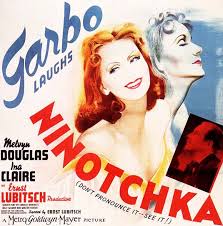
Greta Garbo retrospective and Pantheon movie of the month - NINOTCHKA (1939) - Garbo laughs!


NINOTCHKA is a marvellously spiky satirical romance that manages to mock capitalist decadence and communist dogma in equal measure, as well as giving us Greta Garbo's most versatile performance. She stars as a dour Soviet agent sent to Paris to castigate her three comrades who have so completely failed in their mission of selling confiscated jewellery to raise hard currency for the state. The irony is that the harder than hard Ninotchka is seduced, just as her comrades have been seduced, by fine wines, beautiful clothes, and yes, laughter and love. The seduction comes in the form of Count Leon (Melvyn Douglas), a Parisian rogue, who discovers something finer in himself when he meets Ninotchka and is even willing to go to Russia to get her back. Ninotchka discovers love through laughter rather than melodrama, just as we see the absurdity of dogma through satire. It's a wonderful mix and absolutely pitch perfect, from Billy Wilder's scabrous script through to Garbo's silly hat and the fascinating cameo by Bela Lugosi as the Commissar. But, ultimately, as much as the dialogue shines, it's Garbo's deadpan delivery that kills us - her willingness to send up her cold, unapproachable beauty and to deaden her endlessly expressive face in the early scenes only to truly laugh at herself and her love of champagne as the movie builds.

Ninotchka: We don't have men like you in my country.
Leon: Thank you.
Ninotchka: That is why I believe in the future of my country.

Ernst Lubitsch (TO BE OR NOT TO BE, THE SHOP AROUND THE CORNER) was famous for directing sophisticated comedies for Warner Brothers, and brought his famous "Lubitsch touch" to MGM in the 1930s, typically directing comedy musicals. Given his facility with comedy, he might've seemed a perfect fit for Billy Wilder's scabrous, satirical script, and for the movie marketed as "Garbo laughs!", but he was actually drafted in as a replacement for George Cukor, who had gone off to direct GONE WITH THE WIND. At any rate, no matter how he came to the project, he certainly gave it that wonderful mix or wry humour and genuine warmth. NINOTCHKA feels like it lives in a strange half-world - not quite real but not completely absurd either. It feels like emotions and politics are heightened - lifted above the floor by an inch or two, thanks to the sheer charisma of the cast and genius of the script. The real-unreality reminds me of one of my favourite plays, Peter Ustinov's satirical comedy Romanoff and Juliet. The play is set in a surreal fairy-tale land somewhere between the Cold War and reality and is told with a wry detachment but subtle understanding that, I feel, only comes from the cultural cosmopolitan. Maybe it's pushing it a little too far, but I can't help but wonder whether there's something in both Ustinov and Lubitsch being Russian émigrés, with that outsider's ability to look coolly at the folly of different political regimes.

That cool urbanity runs through every scene of the film and is part of its central concept. NINOTCHKA feels modern - post-modern even. It takes one of the most beautiful romantic leading ladies in Hollywood - a woman famous for the deathbed romance of CAMILLE - and made her play against herself. Without make-up, suppressing her innate charisma, refusing to be romanced, Garbo subverts her natural place in the Hollywood movie. That subversion - that brilliant daring - is what keeps NINOTCHKA fresh and captivating today.

NINOTCHKA was released in 1939 and was nominated for Oscars for Best Picture, Best Actress, Best Original Screenplay and Best Original Story. It lost to Gone With The Wind in the first three categories, and to Mr Smith Goes To Washington in the last.

Senin, 22 November 2010

Greta Garbo retrospective - ANNA CHRISTIE (1930) - Garbo speaks!


"If anyone wants to get drunk, if that's the only way they can be happy, and feel at peace with themselves ... they have my full and entire sympathy. I know all about that game from soup to nuts. I'm the guy that wrote the book." Hickey, in The Iceman Cometh.

ANNA CHRISTIE is a powerful and moving film about living with two emotionally destructive forces: illusions and alcoholism. It was based on a play by Eugene O'Neill, a writer who was himself an alcoholic, and who writes with an acute perception and empathy that seems utterly modern and shocking in a major MGM movie, until you realise that Anna Christie was released pre-Code. How brave, though, for silent movie star Greta Garbo to pick ANNA CHRISTIE for her first "talkie". To shatter the illusion that her fans had of her as a brittle beauty, with a movie about a woman who is herself perceived to be virginal and pure. The reality is that rather than having milk ordered for her by her father and lover, she'd rather wash away her memories of an abusive childhood and her years as a prostitute with whiskey.

The movie is a ninety minute exercise in disciplined story-telling, and the taut structure combined with director Clarence Brown's largely static camera gives the film a stagey feeling. No matter. A modern director might have tried to open the play out for the film, but with Brown - Garbo's favourite director - he was too busy opening out the emotions to care.

The first fifteen minutes sees Chris Christoffersen (George F Marion), a humble sailor, brimming with joy that his daughter, an au pair, is returning home. Marthy Owens (Marie Dressler), a bar-room drunk, and Chris' friend resents his lionising of his daughter, and is only too happy when, in the second fifteen-minute segment, Anna walks into her bar and orders, iconically, "A visky, ginger ale on the side, and don' be stingy, baby." The film comes alive as these two women edge into a friendship over a shared need to drink. Anna hints that her life has been hard and that she resents that her father abandoned her to their distant family. Marie Dressler and Garbo spark off of each other, and it's a joy to watch. In the third fifteen-minute segment, we see Anna and her father on their boat. Her father is reluctant for her to take to the sea, fearing it's no place for any proper person, but Anna, melancholy, comes to love it. And so, we sail into the second half of the movie. A storm strikes, and a fellow sailor appeals for help. So, Anna meets Matt Burke (Charles Bickford). Initially, she resists his advances, and we sense that she hates men just as her father hates the sea. But slowly they settle into a kind of domesticity on the boat and fall in love with each other. This prompts a proposal, and the final twenty minutes of the film gives us the full dramatic results of that. Anna feels she can't accept until her father and lover know the full truth about her.

This is Garbo at her best - strong, honest, upright, and yet vulnerable, damaged, self-sacrificing. Ultimately, through revealing the truth, she becomes the stronger person, leaving the men around her with their shattered illusions - literally throwing them off of her as each one grabs one of her arms as though she is a rag doll to be fought over. The irony is that she becomes strong by revealing her vulnerability - the truth about how damaged she is.

ANNA CHRISTIE is a wonderful film - raw, honest, perceptive, powerful. Garbo gives an amazing performance and dominates the screen, and Marie Dressler is fine in support. But ultimately it's O'Neill's play that is the strength of the film, with its empathy for the damaged alcoholic and its need to confess all.

ANNA CHRISTIE was released in 1930. Garbo, Clarence Brown and William H Daniels were nominated for Oscars but Norma Shearer for THE DIVORCEE, Lewis Milestone for ALL QUIET ON THE WESTERN FRONT and Joseph T Rucker and WIllard Van der Veer for WITH BYRD AT THE SOUTH POLE respectively.

Jumat, 05 November 2010

Pantheon movie of the month - ANNE OF THE THOUSAND DAYS (1969) - This year's girl

1969 was a year when Old Hollywood was being challenged by New Hollywood. Movies like MIDNIGHT COWBOY addressed sex openly, and featured protagonists that were unpalatable, urban and grimy. Movies like BUTCH CASSIDY AND THE SUNDANCE KID took well-worn genres and reworked them, infusing them with a modern sexual sensibility, strong female characters and ambiguity. THE PRIME OF MISS JEAN BRODIE is a movie so scabrous and seditious it still seems as sharp and tart today as it did then.

It might seem odd, then, that I am championing a movie which was a commercial failure, and while nominated for ten awards, remains comparably unloved and undiscussed - Charles Jarrott's debut feature ANNE OF THE THOUSAND DAYS. It is, in some ways, a deeply old-fashioned film: a lavish costume drama full filmed on location at no expense, filmed in cinemascope, and dripping with talent. It was produced by Hal Wallis at the end of a career that began in 1931, and went from silent flicks, to subversive noir, navigated the strictures of the Hays Code, and came out the other side. He'd done the greats in the old classic American style - THE MALTESE FALCON and CASABLANCA - morphed into a producer of Elvis' commercial hits - and still produced challenging genre pics - notably THE SONS OF KATIE ELDER and TRUE GRIT. He also had form when it came to challenging historical dramas - having produced the seminal Burton-O'Toole BECKET in 1964. Hal Wallis, then, knew what he was doing when he took on adapting Maxwell Anderson stage play for the screen. He wanted the big-budget lavish look of a commercial hit, but he also wanted an intellectually honest movie.

The film is yet another take on the story of Henry VIII and Anne Boleyn. It's a story that we are all familiar with, and have seen on screen many times: from the philosophical debate of A MAN FOR ALL SEASONS (one of my favourite films of all time); to the domestic soap opera of THE OTHER BOLEYN GIRL and television's THE TUDORS. Each production has its particular angle, but few face it as head on as ANNE OF THE THOUSAND DAYS and even fewer give us as strong a pairing as Richard Burton and Geneviève Bujold. And I realise that there is an irony here. Richard Burton apparently thought his is a weak performance and hated the film. I, however, think this is a great Burton performance! 

The film opens with Cromwell asking Henry VIII for his signature on Queen Anne's death certificate, convicted of adultery, witchcraft and incest. He is torn - is she really adulterous? Should he give her another chance to bear him a son? What is God's will? And so we move into Act One. Anne is at court, in love with Percy, but the King maliciously stops her marriage so that he can amuse himself with her. She refuses, genuinely in love with Percy, and painfully aware of how the King threw over her sister once he had had his way with her. In Act Two we see Anne move from genuine opposition to the King's advances to falling in love both with him as a man - an intellectual equal with whom she gains pleasure from sparring - and equally with power - his power, and her power over him. She is not a coquette - as in THE TUDORS and THE OTHER BOLEYN GIRL - but a clever girl who wants to protect her position, and not be used and rejected by her King. In the Third Act, Anne is undone. She produces a daughter and then a dead son. Henry's eye roams; Anne manoeuvres to protect Elizabeth's right to succeed him; both are undone by Cromwell. We never doubt that they love each other, but the marriage is unworkable. In the epilogue, we see the tragic consequences: Henry is given the freedom to marry Jane Seymour, but he knows he has been complict in killing the woman he loved and respected. Anne is, however, supreme, in the very final scene - it is her daughter who will reign after all.

Why do I love this film? First, because many a worse film survives thanks to the intrinsic fascination the world has with the story of Henry and Anne. Second, because the film decries the modern fashion to make Anne a capricious, manipulative woman who over-shot her place (curious misogyny that harks back to her original trial, and speaks volumes about the state of modern feminism). By contrast, Geneviève Bujold's Anne is clever, clever, clever. She is neither capricious nor manipulative. She understands the stakes, she knows the strength of her hand, and when she acts it is because she wants to protect herself from being used, and then to protect her daughter. She is rational, loving and prescient. She is, in short, the true hero of this film, and Bujold is equal to that portrayal at every turn. Th third reason why I love this film is for Burton's Henry. He is neither the arrogant boor of A MAN FOR ALL SEASONS nor the insufficiently-regal, easily-turned incompetent of THE OTHER BOLEYN GIRL. Rather, he feels fully formed, and for every vice there is a virtue. Yes, he is arrogant, but he also respects Anne's intelligence. Yes, he is lustful, be he is also loyal to Anne, and genuinely grieved at her death. He does what he does not from over-weaning pride, but because he desperately wants to preserve the Tudor dynasty.

Thus, to my mind, ANNE OF A THOUSAND DAYS is one of the most even-handed and fascinating of the many portrayals of Henry and Anne. Just see them in combat! It's a sheer intellectual joy. And for dignity, pathos and power, I defy you to give me a better valedictory speech than Bujold's Anne. Just watch her un-man Wolsey in Henry's eyes. This is bravura screen-writing and acting. And better still, it is the highlight in a film that features location work, a superb score, a solid supporting cast of British character actors, and Arthur Ibbetsen's camera-work.

ANNE OF THE THOUSANDS DAYS was released in 1969 and was nominated for ten Oscars. However, it only one Best Costumes. The strength of film-making that year - and the revolution sweeping Hollywod that would make big budget costume dramas seem old-hat, is shown by a quick survey of the films it lost to in the other categories: MIDNIGHT COWBOY, TRUE GRIT, THE PRIME OF MISS JEAN BRODIE, THEY SHOOT HORSES DON'T THEY, BUTCH CASSIDY AND THE SUNDANCE KID, HELLO DOLLY!

Rabu, 06 Oktober 2010

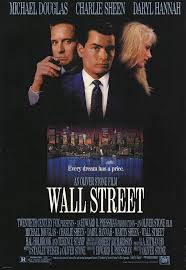
Some thoughts on WALL STREET (1987)


Oliver Stone is left of centre in his personal politics. How ironic, then, that his iconic 1980s morality tale, WALL STREET, single-handedly persuaded the teenagers of my generation that, rather than being teachers, doctors or engineers, what we really wanted to be when we grew up was Liquid. “Rich enough to have your own jet. Rich enough not to waste time. Fifty, a hundred million dollars, Buddy. A player. Or nothing.” Sure, the movie was an alleged morality tale and social critique. It took a naïve kid called Bud Foxx who traded insider information and his loyalty to his father’s little airline for a ticket to the big time. Naturally, he then got skull-fucked by his supposed mentor, Gordon Gekko. Foxx ended up in jail, and so did Gordon. But before we got to that point we saw a young kid living in a flash Manhattan apartment, date a hot blonde chick, eat at the best restaurants, and bask in the glory of the most charismatic man alive, Gordon Gekko. We wanted what Bud wanted, and so what if Gordon was a bit too sharp? – when he spoke about taking sleepy companies and making them profitable, it made sense! This man was dangerous PRECISELY because he was right. Greed was good. Greed was going to turn around over-unionised, over-bureaucratised corporations and increase profits. And don’t think Oliver Stone didn’t know what he was doing. As much as he gives Hugo Chavez a more than fair hearing in his latest documentary, half of what Stone’s doing isn’t applauding Chavez' Marxist policies but being dazzled by Chavez' power. WALL STREET is a film about power – and what makes it a great film – is that it shows how power is both repellant and fascinating. This is the ultimate human tragedy.

WALL STREET was both genius by design and favoured by good fortune. The good design lay in three things: a great script; great direction; and a great leading performance. To start with Stanley Weiser’s script, it’s about as near to perfect as you can get. You start with something rock-solid but not unusual: starry eyed boy tempted by fortune, sells his soul, loses everything, but finds himself. But then you add something truly original – you put that archetypal story in a world that few ordinary people have experienced – Wall Street – but which they were bound to be fascinated by, given its power and glitz. Finally, you express this story in a series of eminently quotable one-liners - “Lunch is for wimps” - “Money itself isn't lost or made, it's simply transferred from one perception to another” - “If you need a friend, get a dog.” 

And then you anchor the whole package in a speech so logical, so persuasive and so dangerous, that today most bankers of my generation can still quote it in full: 

“The richest one percent of this country owns half our country's wealth, five trillion dollars. One third of that comes from hard work, two thirds comes from inheritance, interest on interest accumulating to widows and idiot sons and what I do, stock and real estate speculation. It's bullshit. You got ninety percent of the American public out there with little or no net worth. I create nothing. I own. We make the rules, pal. The news, war, peace, famine, upheaval, the price per paper clip. We pick that rabbit out of the hat while everybody sits out there wondering how the hell we did it. Now you're not naive enough to think we're living in a democracy, are you buddy? It's the free market. And you're a part of it. You've got that killer instinct. Stick around pal, I've still got a lot to teach you.” 

If we look at the direction and the leading performance, that iconic speech is a great place to start. Michael Douglas, with his good looks, slicked back hair, designer suits, and charisma, was everything Gordon Gekko should be. He was the guy whose self-belief was so over-powering you wanted to be in his world.    And look at how Oliver Stone films that great speech. It’s basically a still camera, with no cut-aways. In other words, Stone has the good sense to let the man take centre frame and hold our attention with his words.

True success requires not just talent but luck, and Wall Street had the luck of being released at a time when a lot of people realized that something was afoot, but hadn’t yet seen it articulated. We knew that bankers were becoming more aggressive and that ordinary people were getting caught up in an equity boom – we knew that Reagan and Thatcher had somehow changed the rules of the game – that we could want to make money without being embarrassed about it – but no-one had come out and just plain said it. Gordon Gekko took what everyone was feeling, took it to its logical conclusion, and brought it out into the open. He scared us with his candour – but there was also a crucial recognition and identification. WALL STREET didn’t just echo the zeitgeist, it told us what it was and reinforced its importance. So much so, that when we look back at that era, it’s Gordon Gekko, with his DynaTac phone, who still best articulates the mood of the time.

WALL STREET was released in 1987. Michael Douglas won the Best Actor Oscar beating William Hurt for Broadcast News; Robin Williams for Good Morning, Vietnam; Jack Nicholson for Ironweed; and Marcello MAstroianni for Dark Eyes.

Selasa, 09 Februari 2010

Werner Herzog Retrospective 3 - AGUIRRE WRATH OF GOD (1972)

After his gonzo film-making expeditions to the Sahara and Lanzarate in FATA MORGANA and EVEN DWARVES STARTED SMALL, Werner Herzog put together a tiny crew of eight people and headed to Peru to film his hastily written feature, AGUIRRE WRATH OF GOD. Starring German actor Klaus Kinski, in the first of a five-film collaboration, this movie is arguably Herzog's most admired and most famous. Viewers have responded to its rough and ready look and the delicious post-modern irony of watching a film about losing your mind in the jungle in the midst of an overly ambitious project being made by film-makers losing their mind in the jungle in the midst of an overly ambitious project. AGUIRRE is arthouse cinema's APOCALYPSE NOW, with an industry of mythic tales about its insane production almost more fascinating than the film itself.

The film opens in sixteenth century Latin America, with a group of Spanish conquistadors looking to claim El Dorado for the Spanish crown. They do so in heavy armour, with canons on rafts, bringing along their women and caged chickens. Don Aguirre (Kinski) leads the scouting party in a mutiny and takes them further into the jungle, into desperation and insanity. As the movie unfolds, Aguirre's pychopathic ambitions become clear: he is murderous and harbours a fantasy of founding a new pure race with his symbolically blonde daughter.

I guess if you were being fairly simplistic about it, you could take AGUIRRE as being a political film about how self-serving and basically dumb the conquistadors were - "Isn't that cannon going to rust?" etc. But I think this isn't really a movie about colonial oppression at all. Rather, it's about a charismatic man who has become untethered from reality in an environment where violence is sudden and anonymous. (Notably, we never see the face of the Indians.) So untethered that he even refuses his own death as a reality. Aguirre is the ultimate exemplar of the Will to Power. And, on an even more profound level, AGUIRRE is the story of Herzog making the film. It is a movie that depicts the folly of making an epic film in a jungle. Who is more crazy: the conquistador taking a cannon on a raft; or Dino de Laurentis taking a crew out to Chihuahua to film DUNE? There are many great films about the film-making process - not least 8 1/2. But typically these pit the artist against the commercial studio bosses, with the added pressures of a wife and a mistress. In AGUIRRE, the line between Kinski and Aguirre and Herzog is blurred. Herzog is pitting the film-maker against nature and the chaos of the void itself.

That may all sound a bit pretentious, but I think it's the only way to approach this film. If you go for a straight reading of the film, you're going to find it insubstantial and poorly made. The visuals, the sound, the hasty framing - it all looks pretty shabby by modern standards - and too many actions taken by the characters seem against character and rather random. But taken as a whole - as an immersive endeavour - the movie just works. And it works not just because you feel that Herzog is going to take it wherever it leads - but because of the charisma of Kinski himself. You watch this German guy which his chiseled features hunkering down in his helmet, looking daggers, scheming and plotting and you can almost feel the febrile insanity of it all. In SUNSET BOULEVARD, Norma Desmond says, "We didn't need dialogue, we had faces." She would have loved AGUIRRE.

AGUIRRE WRATH OF GOD played Cannes 1973.

Senin, 23 November 2009

Preston Sturges Retrospective 4 - THE PALM BEACH STORY

THE PALM BEACH STORY is perhaps my favourite Preston Sturges film, beating THE LADY EVE, and just like THE LADY EVE, it's a wonderfully quick-witted, sophisticated comedy featuring a strong, charismatic female character dabbling with the emotions of men who can barely keep up. Claudette Colbert excels as the beautiful Gerry Jeffers, who manages to be world-wise without appearing cynical. Frustrated by her loser-husband Tom (Sturges' regular Joel McCrea) she decides to take off to Palm Beach for a divorce, while simultaneously squirrelling a fortune out of a millionaire to give her ex a start in business. As she so wryly tells him, "You have no idea what a long-legged woman can do without doing anything." Having charmed her way into a free train ticket, Gerry manages to get "picked up" by J. D. Hackensacker III, a chivalrous millionaire who falls for the straight-talking beauty. Conveniently, his much-married sister falls for Tom, who has, by now, made it to Palm Beach too and, as this is a screwball comedy, is introduced as Gerry's brother. Whip-smart dialogue and shenanigans ensue, and they all live happily ever after, or, famously "do they?!"


What I love about this film is how much more modern, frank and wise it seems compared to contemporary romatic-comedies. Most of us would view the 1940s as a far more sexually repressed and simpler world, but here we have the battle of the sexes fought with far more elegance and savoir-faire than you see in the average chick flick. There's something wonderfully grown-up about THE PALM BEACH STORY despite the zany plotting. And most wonderfully, it still seems fresh and full of verve today.

If I prefer THE PALM BEACH STORY to THE LADY EVE it's simply because Tom and Gerry's foil is so much more charismatic and surprising than Henry Fonda's Charlie Pike. Indeed, John D Hackensacker III is one of the all-time great comic creations. Consider lines like "Chivalry is not only dead, it's decomposed," or "That's one of the tragedies of this life - that the men who are most in need of a beating up are always enormous." Or his catch-phrase - that state-rooms and tipping are "un-American". It's shocking to discover that Rudy Vallee didn't merit an Oscar nom for his performance. Then again, is there anything more heart-breaking than watching Tom and Gerry fall in love again while JDH sings "Goodnight Sweetheart"? Only Sturges can pull off that wonderful combination of clever and genuinely heartfelt.

THE PALM BEACH STORY was released in 1942.

Senin, 02 November 2009

Pantheon movie of the month - DOUBLE INDEMNITY

Phyllis: I'm a native Californian. Born right here in Los Angeles.

Walter Neff: They say all native Californians come from Iowa.


DOUBLE INDEMNITY is a brutal, enigmatic film noir - one of legendary director Billy Wilder's best films (a bold claim seeing as he helmed SUNSET BOULEVARD, THE SEVEN YEAR ITCH and SOME LIKE IT HOT) - a slippery masterpiece, like all of Raymond Chandler's slippery thrillers - and creepily shot by John Seitz, DP on SULLIVAN'S TRAVELS. Watching the film today is to find a film that still feels modern, perhaps because of its cynical approach to relationships, and puzzling, because of the conundrum at its centre.

The film takes the form of a crime thriller. Beautiful Barbara Stanwyck is a ruthless woman who uses her sexuality to manipulate men for money. She does a quick number on an insurance salesman called Neff (Fred McMurray), convincing him to murder her husband but to make it look like an accident so that they can both collect on his life insurance. Under the double indemnity clause, an accidental death pays out double. What's completely bizarre is that there is no heat in the relationship between Phyllis and Neff, and it's not clear why he'd switch from being a successful businessman to a murderer. There is something willfully, arbitrarily self-destructive which is utterly sinister and incredibly compelling to watch. The relationship that's arguably even more compelling is that between Neff and Keyes - the boss sent to investigate the "accident", prove it was suicide or murder and deny the claim. Keyes (Edward G Robinson) is the hero of the piece, if you can have a hero in a noir. He forms a genuinely empathetic relationship with Neff and the real suspense of the film comes not from whether Keyes will track Neff down, but why Neff feels compelled to collude in that process.

DOUBLE INDEMNITY was released in 1944 and is available on DVD. It was nominated for seven Oscars. Barbara Stanwyck lost out to Ingrid Bergman for GASLIGHT; John Seitz lost to Joseph LaShelle for LAURA; Billy Wilder lost to Leo McCarey for GOING MY WAY; Miklos Rozsa lost to Max Steiner for SINCE YOU WENT AWAY; it lost Best Picture and Best Screenplay to the Bing Crosby comedy GOING MY WAY; it lost Best Sound to WILSON.

Eventual tags: barbara stanwyck, billy wilder, black and white, edward g robinson, fred macmurray, james m cain, jean heather, john seitz, miklos rozsa, noir, pantheon, porter hall, raymond chandler, thriller

Kamis, 03 September 2009

Pantheon movie of the month - ERASERHEAD

David Lynch - master of surreal suburban horror. Things that seemed egregious and silly to reviewers of his first feature back in 1977 (check out the dismissive, excoriating review in VARIETY) now seem like early examples of style and themes that have been consistently mined over his career. To my shame, I hadn't seen ERASERHEAD until yesterday despite being a hard-core Lynch fan. (Two weeks ago, some friends and I did a Twin Peaks Series 1 marathon - Series 2 is next weekend).

What shocked me was how much now-classic Lynchian tropes were present in ERASERHEAD and how, even in his first film, he managed to find a perfect balance between beauty and horror. Take the haunting song sung by the deformed Lady in the Radiator. It's as beautiful as the song Donna and Maddie sing with James in Twin Peaks but far more unsettling. Even the design is similar to later works - little things like the pattern on the floor, or the style of dress.

The plot sees a repressed man with iconically frizzy hair father a deformed child, perhaps the result of the machinations of the Man in the Planet. The mother leaves him, unable to cope with the child's mournful crying. The father is plagued with nightmares in which his severed head is sold to a pencil company to be used as erasers. He has an affair with the Beautiful Girl Across the Hall, who then cuckolds him. In a fit of pique, the father unwraps the swaddling bandages of his baby, only to find that they are part of the baby's flesh. In an electrical storm, he is transported to another place with the Lady in the Radiator.

It's pointless to try and lay down what all this means. Far better to linger on the nightmarish, Freudian images of a father threatened by his own offspring - visions of impotence - the dread of suburban family existence - the possibility of spiritual salvation.

This movie is source-gold for Lynchians, and I suspect, more annoying to non-Lynchians, than anything else in his oeuvre. It's obscure, but in a manner that provokes emotional, visceral responses, as opposed to the more opaque, and frustrating INLAND EMPIRE. It has been referenced by tens of films, its music has been covered by many a band, and it was reputedly one of Kubrick's favourite films. It prompted the offer to direct ELEPHANT MAN and also, rather bizarrely RETURN OF THE JEDI. You can see a lot in ERASERHEAD, but I'm not sure whether you can see anything to make you think of cute cuddly Ewoks.

ERASERHEAD was released in 1977, after a five-year, cash-constrained shoot.
 

reiview movies and books Copyright © 2012 -- Powered by Blogger