Tampilkan postingan dengan label costume. Tampilkan semua postingan

Sabtu, 17 Maret 2012

BEL AMI - corruption and decadence in fin-de-siecle Paris

Declan Donnellan and Nick Ormerod, better known as theatre company Cheek by Jowl, have brought a gorgeous new adaptation Guy de Maupassant novel, BEL AMI to the big screen. Rachel Bennette's adaptation is faithful to the spiky, scabrous, but ultimately tragic tale of a a young man's corrupt rise to power in decadent, politically slippery late nineteenth century Paris.  The result is a film that begins as a beautifully costumed frothy, sexy, jaunt but slowly and satisfyingly develops into a much darker, deeper film.  I thoroughly enjoyed it - luxuriating in Odile Dicks-Mireaux's wonderful costumes and Stefano Falivene's cinematography.   But most of all, I enjoyed the quality of the ensemble cast.  Robert Pattinson is genuinely impressive and charismatic as social-climbing, narcissistic, capricious George Duroy, an ex-soldier who arrives in Paris without a penny and shamelessly uses his contacts, and their wives sexual frustration, to his advantage.  (It is a far more credible transition to post-franchise adult drama than Daniel Radcliffe achieved.)  But the real fun comes with the three women who Duroy exploits. The first is pretty little housewife Clotilde, played with infinite vulnerability and subtlety by Christina Ricci in heart-breaking performance.  The second is Kristin Scott Thomas' pious, pathetic Virginie, wife of Colm Meaney's newspaper editor.  It is rare to see Scott Thomas look undone by love, as opposed to her characteristic froideur and supreme control, but she is completely convincing.  And finally, there is Uma Thurman as the beautiful, brilliant Madeleine Forrestier - in what is surely a career-best performance. Thurman is simply maginificent.  She perfectly articulates the constrictions placed on an intelligent political woman in an era when she had to exercise her influence through men.  The resulting film, and tragedy, is as much Madeleine's as Georges', and I would love to see Thurman offered more roles like this.

BEL AMI played German 2012 and is on release in the UK, Portugal, Belgium, Lithuania, Ireland and the UK. It opens on the 22nd March in the Czech Republic, it opens on 29th March in Russia, Singapore and Estonia, on 5th April in the Netherlands, on 13th April in Italy, on 26th April in Germany, on 24th May in Australia, on 8th June in the USA, on 27th June in France and on 18th October in Argentina.

Minggu, 18 Desember 2011

SHERLOCK HOLMES: A GAME OF SHADOWS


The sequel to Guy Ritchie's 2009 Sherlock Holmes reboot has just as much style, period atmosphere, wit and bite, but suffers from a rather baggy script from husband and wife team, Michele and Kieran Mulroney.  The result is a film that is certainly entertaining enough to justify a cinema ticket, but which propels the franchise no further, and does a great disservice to Noomi Rapace and Stephen Fry, stranded in under-written roles.

The movie is set in the Europe of 1891 - a febrile, uncertain place with anarchists rising against major powers, and the major powers signing peace treaties but all the while gearing up for what will become the First World War. Holmes' arch-nemesis, Professor Moriarty (Mad Men's Jared Harris) seeks not just to corner the supply of weaponry but also to create the demand for them, by staging terrorist plots and assassination attempts that will bring Europe to war. Holmes (Robert Downey Junior) has to stop him, aided as always by his side-kick John Watson (Jude Law), interrupting his honeymoon with Mary (Kelly Reilly). The movie thus takes the result of a fast-paced, action-set-piece-packed ride across Europe, from London to Paris, by way of Cambridge, and on to the fateful Reichenbach Falls.  Along for the ride are Holmes' indolent but secretly powerful elder brother Mycroft (official National Treasure, Stephen Fry) and a rather random gypsy called Simza (Noomi Rapace - the original Lisbeth Salander). 

First the positive.  All the things that made the first SHERLOCK HOLMES a roaring success are present in the second. I love the dark, richly dressed sets, and CGI that bring to life the grim dirty Victorian cities of London and Paris, filled with dodgy clubs, filthy streets, but punctuated with glorious civic architecture and handsomely dressed upper class men and women.  For the keen-eyed, there's even a glimpse of the Sacre Coeur under scaffolding in Paris harking back to the use of an unfinished Tower Bridge in the first film.  I also love the way in which Ritchie gives us a more pugnacious Holmes than those dessicated twentieth century TV adaptations.  This feels truer to the books, where Holmes definitely has a grimy past and is in fine physical form.  I also love the device Ritchie uses to show his process of deduction - the careful editing, the bullet time replay of fights, the voice-over of every move selected. It all makes for the movies vitality and takes the novels back to their pop-cultural origins.  But most of all, any Holmes adaptation lives or dies on the relationship between Holmes and Watson, and what really sets these films alight is the genuine spark between Downey Junior and Law - the beautifully essayed mutual frustration, respect and affection.  I will always hand over money to see Holmes and Watson sparring.  Finally, to all these factors, we can add one more happy decision.  Jared Harris makes a superb Moriarty, and some of the best scenes in the film are (as they should be) the confrontations between the two - the matching of wits. 

All these good things just about make for the perfect winter blockbuster.  But, as I said before, the movie is severely let down by its script by Michele and Kieran Mulroney.  To be sure, they get some things right. I like the way small details early in the movie become important gags or plot points later on, particularly the urban camouflage!  This is a film in which one has to pay attention despite the superficial appearance of a brawny action flick.  But in too many major ways their script gets it horribly wrong.  The pacing in the first half is woefully slow.  There are some fun action set pieces but we don't really feel we know what the stakes are - what precisely Holmes is trying to do, what mystery he is trying to solve.  It's more than an hour into the over-long two hour run-time before we realise what the plot really is. Poor Irene Adler (Rachel McAdams) is pretty much thrown to the dogs, with barely an impact on Holmes.  But worst of all, the whole gypsy plot line is also a complete waste of time. You could easily have cut it from the film and had a tighter, more evenly paced 90 minute flick.  Presumably Guy Ritchie was happy to have another opportunity to indulge his fascination with gypsies, but is all that nonsense really worth it for 60 seconds of comedy dancing from Jude Law, and a short horse joke?  

As it is, we get poor Noomi Rapace cast as Simza - a talented actress who basically looks pained for 120 minutes.  Moreover, poor Stephen Fry is utterly short-changed in his role as Mycroft - I mean - what comic joy could have been woven from an encounter between Fry and Downey Junior on screen!  But the screenwriters simply had a naked arse gag. Poor.  The storyline also leaves poor Kelly Reilly rather short-changed as Mary, although she, unlike Noomi Rapace, does manage to steal every scene she's in and leave a favourable impression far outweighing her actual screen-time. Let's hope now that Simza has been rendered irrelevant, Mary and Mycroft will get more screen-time in the next film. And yes, I suspect that given the early box office there will be another film.  And yes, this instalment was still enough fun, despite its flaws, that I look forward to it. I only hope that the producers replace the screenwriters.

SHERLOCK HOLMES: A GAME OF SHADOWS is on release in the US, UK, Canada, Hong Kong, the Netherlands, Ireland, Italy, Sweden and Turkey. It opens on December 22nd in Malta, Germany, Israel, Singapore, Slovenia, Thailand, Finland, Indonesia, Romania and Taiwan, Denmark and Norway. It opens on December 29th in Belgium, Kazakhstan, Lebanon, Russia, Estonia, India, Lithuania and South Africa. It opens on January 5th in Armenia, Australia, the Czech Republic, Greece, Hungary, Portugal, Spain and Poland. It opens in Brazil on January 13th; in France on January 25th; and in Japan on March 10th.

Sabtu, 12 November 2011

iPad Round-Up 3 - THE WAY BACK

Yet another heartfelt, earnest political drama with impeccable production values but no soul.  THE WAY BACK is a movie I admired more than enjoyed - a movie whose run-time dragged, whose journey was interminable, whose real historic story seemed somehow absurd and beyond human endurance when shown on screen.  

In post-WW2 Siberia, a rag-tag group of prisoners - political and hardcore thugs, plus one random girl - do the unthinkable - they escape by walking across a continent, 400 miles and 5 months, through Russia into China and then India. They talk - explaining the obvious.  They walk.  They survive.  But there are no emotional truths, no small practical details of how they survived, to immerse us in their story.  

Peter Weir (MASTER AND COMMANDER, THE TRUMAN SHOW, DEAD POETS SOCIETY) has a real mis-step with this clunking film - over-burdened by its political and attempt at spiritual significance.  Wasted performances by Jim Sturgess, Colin Farrell, Mark Strong, Ed Harris and Saiorse Ronan. Only Russell Boyd 's cinematography is memorable, but that certainly isn't enough to warrant a viewing of this tedious film.

THE WAY BACK played Telluride 2010 and opened worldwide in the first half of 2011. It is available to rent and own. THE WAY BACK was nominated for Best Make-Up at the 2011 Oscars but lost to THE WOLFMAN.

iPad Round-Up 2 - THE CONSIPIRATOR

Yet another thumpingly pedestrian issues-film from Robert Redford.  The movie takes the form of an historic court-room drama, with James McAvoy playing the lawyer defending Robin Wright's Mary Surrat of conspiracy to murder President Lincoln (she was Booth's landlady and her son has mysteriously fled.)  This being a Redford film, the politics are naively simple and oppositional: McAvoy's lawyer is the champion of all things good - liberty, the constitution and the right to a fair trial even in the wake of an appalling political crime.  Kevin Kline's war minister represents the forces of evil:  putting ends before means, willing to sacrifice right to expediency, with a contemporary relevance in that Surrat was denied a civilian trial before her peers, and tried under military law. 

The issues are fascinating, the casting top notch, Newton Thomas Sigel's cinematography is superb, and the dilemmas at the movie's heart are clearly highly relevant today.  The problem is that it feels like a college debate rather than a movie.  Movies must entertain. If they educate and provoke as well, then all to the good. But no-one ever learned anything while their eyes were rolling to the back of their head in boredom.  Castigat ridendo mores. Moliere knew this. Redford apparently does not  He needs to treat his subject matter with a little less respect and his audiences with a little more.  

THE CONSPIRATOR played Toronto 2010 and opened in summer 2011 in the USA, Hong Kong, South Korea, Ireland, the UK, Portugal, Australia, Turkey, Kuwait and Germany. It opened last month in Singapore. It goes on release in Belgium on November 16th and in Spain on December 2nd. It is available to rent and own.

Sabtu, 29 Oktober 2011

London Film Fest 2011 Day 16 - THE DEEP BLUE SEA

Jolyon Coy (Philip), Kate Ogborn (producer), Tom Hiddleston (Freddie), 
Terence Davies (director and screenwriter), Sarah Kants (Liz), 
Harry Hadden-Paton (Jackie) at the premiere of THE DEEP BLUE SEA

This review is brought to you by Professor007, long missing from these pages, and a dutiful stand-in when reviewsmoviebook was struck down by cine-flu.


It is rare these days to find a movie that captivates one for its length. It is rarer still to find a movie that keeps one in its spell well beyond the hustle of the tube on the way back home.

Terrence Davies' adaptation of Terrence Rattigan's play The Deep Blue Sea is such a masterpiece. It is beautifully set in 1950s London, yet its topic is timeless. Hester (Rachel Weisz), a young and attractive woman of simple background, who is married to William (Simon Russell Beale), a distinguished man of law considerably her senior, falls in love with the young and handsome maverick Freddie (Tom Hiddleston). In Freddie, Hester seems to find the passion, lust, and physicality that she misses in her married life. Some months into the affair, however, William finds out and Hester decides to leave William and move in with her lover. Freddie, however, seems unprepared for such co-habitation: mentally stuck in his life as hero during World War II, he struggles to find a new focus in life, and is unable to emotionally care for anyone else than himself. Despite this lack of attention by Freddie and her husband's continued attempts to win her back, Hester's love for Freddie is unbroken. She does not, however, get the committed and passionate relationship she so desires, and with every increasingly desperate failed attempt to win Freddie over, she degrades herself more and more.

What is striking in its sadness and yet utter plausibility is how the behaviour of three people, of which neither is spiteful or keen to hurt the other ones, can lead to such pain and misfortune. Rachel Weisz beautifully portrays a woman who, in her attempt to find love and passion, knowingly destroys her life. William, excellently played by Simon Russell Beale, tries to win her back, but is too restrained by his upbringing to show the emotions his wife may be longing for so much. Finally, Freddie is a man who struggles with the void of purpose in his life and at the same time is overwhelmed by the passion of his lover.

To me, an oscar candidate for best movie, best actress and best supporting actor. On vera.

THE DEEP BLUE SEA played Toronto, San Sebastian and London 2011. It will be released in the UK on November 25th and the US in December.

Selasa, 25 Oktober 2011

London Film Fest 2011 Day 14 - WUTHERING HEIGHTS (2011)


Andrea Arnold (RED ROAD, FISHTANK) is an exceptional British director - a woman whose films take us under the skin of the characters she is portraying. She isn't a director of dialogue but a director of sensory perception. We hear the wind; dogs scuffling; kisses. We can almost feel the texture of worn clothes; curled hair; ruffled blankets; the mist on our face. We feel the relationship between two people from the way they are in each other's presence, not from the dialogue. And every emotion felt by the characters is mirrored in nature, brought to us with startling clarity by Robbie Ryan's award-winning cinematography. In short, Andrea Arnold echoes the authenticity and heightened sense-perception of Terrence Malick - high praise indeed - but justified. All these qualities make Andrea Arnold the perfect director to take on Emily Brontë's Wuthering Heights - a movie whose characters are so much embedded in the wild beauty of the Yorkshire Moors. Working in collaboration with screenwriter Olivia Hetreed (GIRL WITH A PEARL EARRING), Arnold has taken a bold approach to the source novel. She only portrays the first half of the novel, takes away the framing device of Nelly recounting the story to a traveller, as well as the gothic vision that opens the novel.  What this does is allow her to take her time over establishing the central characters and conflicts.  

The Earnshaw family live in a ramshackle farmhouse on the Moors in the early nineteenth century.  The puritanical father brings home a poor young black boy, later baptised as Heathcliff, throwing the elder son, Hindley into brutally violent jealousy and contempt and the young daughter Catherine into a kind of selfish, selfless profound love.  When the father dies, Hindley brutalises Heathcliff; and his poor, rough person stands in sharp contrast with the smooth refined Linton family.  And so, when Edgar Linton proposes, Cathy accepts, though feeling she is betraying both herself and Heathcliff, who overhearing, runs away. So ends the first hour of the film.  In the second hour, Heathcliff has returned a rich man, and Cathy is now married to Edgar.  Their love is hemmed in by Edgar sending his sister, Isabella, as chaperone, and when Heathcliff learns Cathy is pregnant, he returns this apparent "betrayal" by seducing Isabella, so setting off a nervous reaction in Cathy.

The story is, then, powerful, passionate, violent - filled with supposed and real slights, revenge, and a love so painful to bear it results in self-destructive behaviour.  For it to work on screen, we have to feel that visceral connection between Cathy and Heathcliff - we have to believe that their every breath and decision is coloured by the connection.  In the first half of the film, I absolutely believe that thanks to some exceptional casting, the portrayal of young Cathy and young Heathcliff sets a new benchmark among the tens of film adaptations. Shannon Beer and Solomon Gave quietly, powerfully, portray a real and charismatic connection - they are quite simply magnetic. Sadly, the movie is let down by indifferent casting in the later scenes, with Kaya Scodelario (Effy in TV's "Skins") and James Howson.  I didn't buy into their relationship - Howson was too milksop, too little darkly enjoying his revenge on Hindley, not malicious enough with Isabella - and Scodelario simply didn't have the look of a wild bird tamed, caged - she looked to Isabella-ish!   Also, I know we are meant to suspend our disbelief, but the two Cathy's look utterly dissimilar. One feels that better casting would've provided the continuity seen in the Young and Teen Kevins in Lynne Ramsay's WE NEED TO TALK ABOUT KEVIN.

WUTHERING HEIGHTS played Venice (where Robbie Ryan won Best Cinematographer) and Toronto 2011. It opens in the UK on November 11th; in Spain on November 25th; in Slovenia on January 26th; and in Poland on March 23rd.

Senin, 24 Oktober 2011

London Film Fest 2011 Day 13 - W.E.


It would be all too easy to write off W.E.  - a biopic of Wallis Simpson and King Edward VIII - as a self-financed vanity project from Madonna, a highly successful musician who has serially failed to translate that success to celluloid.  However, if one is able to forget who has directed the film, and review it on its own merits, a far more nuanced and fair-minded discussion can ensue.  Because, much to my surprise, W.E. is a beautifully photographed, acted, and directed film, let down only by the concept of intertwining the story we all care about with the story of a modern bored housewife called Wally Winthrop.  This unnecessary, unenlightening contemporary drama frustrates us - it comes off as an hour long PR stunt for Sotheby's New York - and takes precious time away from Andrea Riseborough's charismatic and sympathetic portrayal of Wallace Simpson.  If this movie had just had the courage to stick to the source material, it could've been truly great.

The contemporary story is bland and predictable.  Abbie Cornish plays the bored and abused houswife of a financially successful but cheating husband.  She obsessively visits an exhibition of Wallace Simpson's personal artefacts, envisioning Wallace's life and desperate to know what it feels like to be loved that much.  It is a "way in" to the story that is completely unnecessary and not helped by a completely cliched "rich woman meets poor man with a soul" love story between Wally and the security guard Evgeni (Oscar Isaac).  

The Wallace Simpson-King Edward story is told in a far more balanced and sympathetic manner than most retellings.  Madonna briefly and deftly essays her unhappy first marriage in Shanghai, with a powerful bathroom scene.  Wallace (Riseborough) then turns up in London, breaks into the royal circle, and we see her evident intelligence and wit win over the less impressive but again, sympathetically portrayed, King Edward VIII (James D'Arcy).  Once again, with elegance and economy, Madonna shows Wallace's talents for throwing parties, refusing to pander to the King - her complete understanding of her own limitations and attractions - and her foreboding at the life she would lead post-abdication.  She does not come across as grasping or materialistic but as a vibrant woman hoist by her love affair -  a truly tragic tale. These scenes beautifully portray her dilemma, and give the low budget of the film, are stunningly well produced.  The costumes, hair, the very look of that era is brilliantly captured, and DP Hagen Bogdanski (THE YOUNG VICTORIA, THE LIVES OF OTHERS) captures the crisp light of the Cote d'Azur as well as the dank, claustrophobic interiors of the royal palaces.  In the supporting roles, Natalie Dormer is particularly waspish as the jealous and manipulative future Queen Mother. I wanted to spend far more time in this story, and particularly to know more about Wallace's life post-abdication.  But sadly, that was not to be.


Andrea Riseborough (Wallis Simpson); Madonna (Writer-Director) and 
James D'Arcy (King Edward VIII)at the UK premiere of W.E. 
at the BFI London Film Festival 2011.

W.E. played Venice, Toronto, Hollywood (where Andrea Riseborough won the Spotlight Award) and London 2011. It will be released in the US on December 9th; in the Netherlands on December 22nd; in the UK on January 20th and in Sweden on March 16th.

Kamis, 20 Oktober 2011

London Film Fest 2011 Day 8 - LET THE BULLETS FLY


LET THE BULLETS FLY is an utterly ridiculous, hilarious, cartoonish movie of the kind that made KUNG FU HUSTLE so superb, but without the latter film's heart. Written and directed by Wen Jiang (THE SUN ALSO RISES), it is set in 1920s provincial China, where the tax revenues of small towns are fought over by provincial governors and brutal mafiosi drug runners. The movie is a kind of action flick come comedy of errors.  Chow Yun-Fat looks like he's having a ball in the roll of Master Huang - the local drug lord defending his territory against the new governor, played by Wen Jiang.  That governor is an imposter, really a gangster, but the real meat of the story is whether either that gangster or indeed Master Huang is really the legendary and feared gangster Pocky Zhang. And why on earth is the governor, who came to the town to milk it of its cash, turning Robin Hood?!  

The movie unfolds in a series of beautifully choreographed tricks and fight scenes as each guy tries to get the better of the other, culminating in the final show-down and revelation. There are lots of laughs, plenty of ridiculousness and a superb supporting performance by Carina Lau as the governor's wife - willing to do anything to support her own position. The only fault is that it's probably too long at over two hours - there's only so much zaniness one can take in one sitting.

LET THE BULLETS FLY opened in China in 2010, in Hong Kong and Singapore earlier this year, and played London 2011.

Minggu, 16 Oktober 2011

London Film Fest 2011 Day 5 - HARA-KIRI: DEATH OF A SAMURAI


Writer-director Takashi Miike, the master of gory violence, is in altogether more sombre mood with his remake of Masaki Kobayashi's iconic 1962 feature "Harakiri". Takashi Miike's film takes the form of a highly formally controlled, slow-paced, beautifully depicted tragedy.  The form is particularly complex and satisfying - a tale within a tale within a tale, book-ended by acts of wince-inducingly graphic and stunningly choreographed violence.  It is both a personal, family tragedy, and a lament for the unbearable burden that the honour code of the samurai places on its follower.  

The movie is set in seventeenth century Edo, where peace has left the samurai caste impoverished and unemployed. The desperate ronin (samurai without master) apply to local lords to commit ritual suicide in their courtyards "to restore honour", but hoping the lords will pay them to leave.  As the film opens, Hanshiro Tsugumo (Ebizo Ichikawa) is making just such an application and the Senior Retainer warns him not bluff this particular house.  This is the outer layer of the story.  The retainer tells the tale of the previous applicant, Motomo Chijiwa (Eita) whose bluff was called.  The second layer of the tale.  And then, we get to the very heart of the film, Tsugamo's reply to the Retainer, which reveals that he knew Chijiwa well.  In fact, the boy was his son-in-law - husband to an ailing wife and son, desperate for a few pennies for medicine.  

In the telling of the three tales, Takashi Miike depicts with unflinching gaze the truth behind the exotic myth of the samurai - that their fortunes are swept up in wider feudal conflicts - a knife-edge walk between poverty and glory - the lack of humanity in their strict honour code.   This is done not just through the graphic depiction of ritual suicide, but more subtly in the colour palette of the film.  The reality of life is depicted in shades of grey.  Real life is dark, unlit, unwarmed, grim and bleak. This contrasts with the burnished red coat of armour lovingly given pride of place in the courtyard - the only shock of colour in the film, constantly in the glow of candles.  It's as though society has been up-ended, inverted - and the prison-like samurai code is being given the upper hand over life itself.

HARA-KIRI: DEATH OF SAMURAI is an amazing film.  Moving, never melodramatic despite the tragedy, formally beautiful, with set pieces that are unbearably tense and vividly depicted.  It is not the typical film one has come to expect from Takashi Miike and his long-time fans may be disappointed at its serious, almost lyrical tone. But I found it to be his best, most mature, most artistic work to date.  The only quibble is that the 3D adds very little to the experience. 

HARA-KIRI: DEATH OF A SAMURAI played Cannes 2011 where it was the first film to be shown in 3D.  It opened in Japan on October 15th and opens in France on November 30th.

Sabtu, 10 September 2011

JANE EYRE (2011)

You would rather drive me to madness than break some mere human law?

In the context of a literary education dominated by Jane Austen (English all-girls prep school - rolls eyes), Jane Eyre felt radical - a proto-feminist tract in the form of a gothic-romantic novel. Charlotte Bronte presented us with a mid-nineteenth century heroine that was plain and poor, rather than pretty and middle-class. A heroine with a strong morality but who rejects both the piety of Mr Brocklehurst and the Christian "cheek-turning" martyrdom of Helen Burns. A heroine that attracted her lover, Edward Rochester, with moral and intellectual strength rather than sparkling wit. A heroine that rejected that same brooding Byronic hero to protect her moral autonomy and sense of self. A heroine who, even in the very depths of desperation and poverty, was never a "damsel in distress" to be rescued by her cousin, St John Rivers. Charlotte Bronte's Jane Eyre is morally and intellectual tough, but never a prig (in the way that Austen's Fanny Price can be), and her happiness resides in finding a man who with whom she can be herself - who gives her permission to be herself - the ultimate philosophical emancipation. And whereas so many romantic novels end abruptly with a marriage, Jane Eyre ends with a resolute declaration and the readers belief that, yes, this really is a marriage of equals that will last. 

Despite my great respect for the novel, I feel that it lends itself less easily to screen adaptation that the sparkling novels of Austen. Gothic tales, if mis-handled, can seem melodramatic and ridiculous. And then there are those few episodes which stretch credulity on the page, and look absurd on screen. How should a modern audience react to the sight of Edward Rochester dressing up as a gypsy woman to read Jane's fortune? How will they react to the absurd coincidence that St John Rivers is Jane's cousin? And how far will Hollywood have the courage to cast a hero and heroine that really are plain and Byronically ugly respectively? To my mind, the most successful adaptations have been the 1944 JANE EYRE with a truly frightening and Bryonic Orson Welles as Rochester, and a script by John Houseman and Aldous Huxley. The only negative was the altogether too pretty and insipid Joan Fontaine as Jane. After that, I very much liked the 1996 Franco Zefirelli JANE EYRE starring a good-looking but suitably old and menacing William Hurt as Rochester and the absolutely perfect Jane in the jolie-laide Charlotte Gainsbourg. Both of these adaptations retained the gothic, dark atmosphere of the novel and showed the struggle between passion and morality. Both are memorable and definitive in their own way.

The new adaptation of JANE EYRE from director Cary Fukunage (SIN NOMBRE) and screenwriter Moira Buffini (TAMARA DREWE) has its moments but must, overall, be judged a failure. And for that, I blame the writer and director. Buffini's screenplay is admirably concise; uses an effective flashback structure; and thankfully omits all episodes that force a willing suspension of disbelief that strains the modern viewer. (No gypsy and the Rivers aren't cousins). But, Buffini also compresses Jane's early years so radically that we do not get a sense of how she came to be the remarkably self-possessed, morally upright woman that Rochester falls in love with. The Red Room is shorn of its Gothic visions; the death of Helen Burns is dealt with in a matter of minutes; and most importantly, the good example of Miss Temple, the kind teacher who forms so much of Jane's character, is omitted entirely. And so, after a few short episodes, we go to Thornfield and see, almost as quickly as we rush through Jane's childhood, Rochester and Jane falling in love. Admittedly, once we get to that point, the love story plays out beautifully, because Buffini finally gives the story room to breathe, and Mia Wasikowska and Michael Fassbender (though both far too beautiful) finally get the chance to show what fine actors they are. 

But as the story develops into its dramatic climax, the movie and the script absolutely fails. For Buffini and Fukunaga have taken the decision to focus on the romance, the intellectual and emotional inter-play, at the expense of the Gothic. There is no "woman at the foot of the bed", no "tearing of the veil"...It's as though they are embarrassed by it, or unwilling to keep faith with Eyre's vision. Indeed, they are so embarrassed by the generally brooding and serious tone of the novel, that they feel it necessary to make Judi Dench's Mrs Fairfax comic relief - pathetic. And so we are left with a very beautifully acted and wonderfully photographed (DP Adriano Goldman) love story yes - and with no little power - the scene where Rochester begs Jane to stay is quite wonderful. But this is not Jane Eyre, not really. The proto-feminism is there - the Victorian romance is there - but the Gothic is cruelly, disastrously under-played.

JANE EYRE was released earlier this year in the US, Estonia, Latvia, Taiwan, Portugal, South Korea, Iceland, South Africa, Singapore, Israel, Kuwait and the Czech Republic. It is currently on release in Hong Kong and Russia. It opens on September 9th in Belgium, France, Ireland and the UK. It opens on September 16th in Sweden; on September 22nd in the Netherlands; on December 1st in Germany; on December 9th in Turkey and on February 23rd 2012 in Denmark.

Jumat, 01 Juli 2011

iPad Round-Up 4 - SEASON OF THE WITCH


Evidently, the Nic Cage crusader-slash-religious-hysteria flick SEASON OF THE WITCH is a bunch of ridonkulous hokum. The key question is whether, like SOLOMON KANE, it manages to embrace its pulpy traits to become a truly entertaining piece of work. The sad answer is, "a thousand times No". SEASON OF THE WITCH is a confused, sub-par piece of hammy genre entertainment, in which Nic Cage is disappointingly not as crazy as he was in BAD LIEUTENANT. 

The plot is pretty simple.  Nic Cage and Ron Perlman are 14th century Crusader knights who, despite battling for their Christian Kings, end up falsely accused and on trial for their lives. Thus newly sensitised to the cruelty of arbitrary justice, they journey home through a plague-infested land.  A monk charges them to deliver a Witch to an exorcism designed to rid the country of the plague, but of course Nic Cage's Knight wants her to have a fair trial. And, after all, we sort of think that the plague might be caused by a travelling salesman with infected reliquaries rather than an innocent girl attracting unwanted attentions. That said, as Roger Ebert points out in his review, the film's post-modern cultural sensitivity is somewhat undermined by the fact that the poor girl doesn't even get a name!  

The look of the film is sort of lo-rent Conan slash Coppola's highly colour-coded Dracula with battle scenes from the Ridley Scott school of loud noises and incomprehensible editing. Lots of over-wrought CGI backdrops, mud and sweat, but not much actual inspiration or imagination. DP Amir Mokri (TRANSFORMERS 3, FAST & FURIOUS) obviously long since sold his soul to Michael Bay and is probably a better candidate for  salvation-by-exorcism than the poor girl. And as for Director Dominic Sena, where's the visual wit and verbal cheekiness that enlivened SWORDFISH? 

SEASON OF THE WITCH went on global release in January through March. It is currently on release in Italy and opens in Japan on July 30th. It is also available to rent and own.

Minggu, 01 Mei 2011

Late Late review - London Film Fest 2010 Day 11 - 13 ASSASSINS


13 ASSASSINS is a fantastic film. I literally bounced out of the cinema having watched it! On one level it's a brilliantly lavish Samurai film in the classic mould - beautiful costumes, whole villages created as sets, codes of honour broken, elegantly choreographed sword-fighting - and it reminded me how much I loved Samurai films. On another level, it's typical Takashi Miike mischief - satirising the violence of Samurai movies with a level of gore and blood that is quite simply ridonkulous - and making the village idiot actually a better sword-fighter than the pompous Samurai.

The plot is straight out of Shogun Total War 2. It's mid 19th century Japan with the Shogunate on its last legs but still rich enough to hire Shinzaemon (Kôji Yakusho) to assassinate the evil pretender, Lord Naritsugu (Gorô Inagaki). The first half of the film is a Kurosawa style "putting the band back together" narrative, with the cool twist of having Yusuke Iseya play the provincial dolt who gains a place alongside his hard-core Samurai team-mates. And in the second half of the flick, they turn the town of Ochiai into an A-Team style booby-trap setting up a brutal, bloody massacre.

The first thing to say about 13 ASSASSINS is that it looks amazing. The production design is lavish in style and flawless in its period detail, creating a look typically associated with epic historical drama. The photography (Nobuyasu Kita) echoes this lavish style with Kubrick-like deliberate framing and slow, stylised camera movements. Interior scenes are lit by candelight to give an authentic feel and the detail of the costumes is breath-taking. The second thing to say is that beyond the historic detail, Takashi Miike remains the Director of the Egregious - from the audacious sadism of Naritsugu (e.g. the women crippled so extremely by "total massacre") -  to the egregious and dogmatic code of honour of Shinzaemon -  to the balletic, operatic, monumental final display of bloodshed in the village. Miike creates a film that is utterly modern in its gorging, self-indulgent, obese display of blood and violence - but also a film that is curiously nostalgic for the age of the Samurai when that bloodshed was part of a self-sacrifice for honour. His film is, then, a bravura performance - modern, nostalgic, bloody, but with depth. Undoubtedly one of the finest films of the London Film Festival.

13 ASSASSINS played Venice and Toronto 2010 and was released in Japan in September. It opens in the UK in May 2011.

Kamis, 14 April 2011

THE EAGLE - Job. Done.


I really enjoyed THE EAGLE. I loved it in the same way that I love commanding my Roman cohort to form the Testudo against a bunch of screaming German women and wolf-skin wearing savages in Rome Total War. It's a guilty pleasure that works for anyone who ever loved sword-and-sandal epics  or was forced to do a lot of class-civ. as a kid. And let's be honest, "the ninth legion" is a phrase that, for people educated in a certain time and place*, resonates strongly. Raised by Pompey to fight in Spain, the Legio Nona Hispana were definitely massacred by Boudica's Iceni in AD 60's Roman Britain, and were rumoured to have vanished north of Hadrian's Wall in AD 120, but may well have been finally defeated by the Teutons....Whatever happened, they represent the inability of Mighty Rome to hold off the Native Horde - a story that resonates today as we see the superior forces of our modern superpower struggling to fight scrappy insurgents in the Middle East. And this is the parallel that Scottish director Andrew MacDonald and screenwriter Jeremy Brock (THE LAST KING OF SCOTLAND) bring to this adaptation of Rosemary Sutcliff's popular children's historical adventure, "The Eagle of the Ninth", by giving the Romans American accents and by confronting them with the motives of the "insurgents".

As in the novel, the story is simple and compelling. Young Marcus Flavius Aquila (Channing Tatum) is the son of the disgraced Roman general whose legion was massacred by the northern British tribes. Worse still, those tribes captured the legion's Eagle - its symbol of authority and good fortune. Desperate to restore his family's honour, Aquila deliberately seeks a posting to Hadrian's Wall, and when injured defending his men, he journeys north of the border to find the Eagle without the sanction of Rome. We have, then, the Stakes. But the heart of the novel and the film is the relationship between Aquila and his slave-then-friend, Esca (Jamie Bell). Aquila's emotional arc takes him from viewing the Celts as savage insurgents of little honour and less integrity, to brave fighters defending their homeland against Rome's rape and pillage. The Seal People may do savage things - not least their "crown prince" as played by Tahar Rahim (UN PROPHET) but in death, when the war paint washes off, he is just a young man defending his tribe. So, by the end of his journey, while Aquila is still convinced of the idea of Rome, he can cock a snook at the Senate, and take the lead of a Freed Man (a ham-fisted scene admittedly.)

The resulting film is really well put together. Andrew MacDonald gives us all those little details of life in a Roman outpost that made the novel feel real and alive - we feel the armour chafe, we feel the adrenaline inside the Testudo, we hear the crowd cheer the gladiator. I loved Anthony Dod Mantle's photography - beautifully capturing the Scottish rural landscape and the fog of battle. This isn't Rome as glossy and glorious, but life in the trenches against an enemy that hates you. I was impressed by Channing Tatum as Aquila. He was convincing as the young soldier from the patrician family - born to lead - but also as the demoralised and depressed decommissioned soldier. He had genuine chemistry with Jamie Bell as Esca, and the way in which their understanding of each other develops is the back-bone of the film. Of course, Bell is the better actor, but the pairing didn't feel as imbalanced as I feared it might.

Is the film perfect? Of course not. As I said before, the final scene seemed a little cheesy. (Englishman) Mark Strong's American accent was so broad as to be distracting. We lost some emotional punch in the reduction of Cradoc (the guy on the chariot with knives sticking out of the axle) from a guide-turned-traitor to a generic screaming savage. And by axing Cottia (the love interest in the novel) but refusing to amp up the homo-erotic aspects of the story, MacDonald leaves the relationship between Aquila and Esca annoyingly ambiguous. Still, for all that, I have to say that I thoroughly enjoyed THE EAGLE. It was beautifully put together, solidly acted, and gave me a real feel for AD 100s Roman Britain. Job. Done.

THE EAGLE was released in February in Kazakhstan, Russia, Canada, the USA; Bulgaria, Finland, Romania, Indonesia and Armenia. It was released in March in Germany, the Netherlands, Poland, the Philippines, Greece, Kuwait, Egypt, Denmark, Hungary, Malaysia, the UK, Portugal and Singapore. It was released last week in Lithuania and Spain. It opens on April 18th in Estonia and Norway; on April 28th in Croatia and on May 13th in Turkey. THE EAGLE is released on Region 1 DVD on June 21st. 

*And if you think I'm taking this too far, we learned Latin before we learned French; our school magazine was called Aquila (Eagle!), the debating society was the Quintilian Society; the school moto was Alta Petens....To say that I was conditioned as a child to be fascinated by Rome is an under-statement.

Kamis, 17 Februari 2011

TRUE GRIT

The Coen Brothers are, for me, film-makers who chronicle the absurd and the arbitrary. Their films feature ordinary folk living ordinary lives, taken up by Chance and led into crazy adventures.The protagonists may well be eccentric - and often, superficially, have crazy hair - but they have nothing on the people they meet and the circumstances they encounter. In the early films, Chance manifested itself in a kind of dark, absurd, comedy. The protagonists were put through the ringer but ultimately were set down back in their homes, happy and well. But of late, the Coen Brothers' films have taken on a darker tone, and become almost obsessive with the arbitrary nature of Chance. NO COUNTRY FOR OLD MEN, following directly from the novel, goes to black mid-sentence. The message seems to be that after all this cruelty, all this killing, there are no answers, no justice, no meaning. A SERIOUS MAN is similarly nihilistic. It's a film filled with search for meaning, typically religious meaning, but ultimately it holds no answers. A good, if complacent man, suffers the torments of man and nature. Why? There isn't a why.

It was, then, with some surprise that I learned that the Coen Brothers were adapting Charles Portis' True Grit for the screen - a novel whose over-arching theme is "You must pay for everything in this world, one way and another". For, at the most basic level, True Grit is a story about a young girl in late nineteenth century rural Arkansas, who hires a mercenary to help her get revenge on the thief that murdered her father. And at a more complicated level, it's a story about the sacrifices that those who seek to punish must make. The heroine, Mattie Ross, pays dearly for her single-minded obsession with revenge, but even her associates, Rooster Cogburn and LaBoeuf lead diminished lives as a result. Punishment is meted out to all, and in direct proportion to their crimes and faults. This is not, then, the world of arbitrary justice so often depicted in Coen Brothers films.

The Coen Brothers' adaptation of the book is faithful - as faithful as their adaptation of No Country For Old Men - and far more faithful than the 1969 film starring John Wayne, Glen Gampbell, Kim Darby and, in smaller roles, Robert Duvall and Dennis Hopper. In this film, the voice of the narrator - Miss Mattie Ross - comes undiminished to the screen, and it's no surprise to see that it's Hailee Steinfeld, the young girl playing that character, who has the best of the dialogue and the pick of the award nominations. It's a gift of a role. In the book as in this film, Mattie is as particular as any Coen Brothers character. She's a teenage girl with a cool head for business, a strong religious sense of right and wrong, and a determination beyond her years. She weighs everything according to its cost and brooks no opposition. The funniest scenes in the film come early on, as we see wily adults try to fool her or dismiss her, only to be taken to the cleaners themselves. The lawman she hires, Rooster Cogburn (played by a wonderfully grizzled Jeff Bridges), comes to respect her after initially trying to shake her off. And even the vain Texas Ranger, LaBoeuf (a wonderfully funny Matt Damon), overcomes his initial frustration and distaste to feel affection for her. But Mattie is warned early on by a local lawyer that she will pay dearly for this stubborn determination, and as we see the movie's final scene and epilogue we can see that that has been the case. But we get no sense that she regrets her actions. She knew the cost, and accepted it. Her sense of justice is as cool whether concerning herself or her father's murderer, Tom Chaney. And that's the message of the novel and the film. True Grit is to do what you feel is right, but to look unflinchingly at the consequences. And when it comes to steadfast courage, Mattie beats the men she hires hands down.

The resulting film is a work of the highest quality and quiet strength. It's not as superficially provocative or quirky as many of the Coen Brothers' films, and because of its thematic material and lack of spectacular haircuts, many reviewers have dismissed it as being "not a Coen Brothers film". My view on this is that the Coen Brothers have become so reknowned for delivering films with rapier-like dialogue, superb acting performances, stunning cinematography (typically from Roger Deakins) and great scores (here, Carter Burwell), that viewers and reviewers have become complacent. It's as if the machine is so well-oiled that it is taken for having been effortless, or even banal. To my mind, this is utterly wrong-headed. TRUE GRIT is a kind of pantheon film - a film in which every part of the whole - lead performances, supporting performances, photography, design, editing, dialogue - blend seamlessly into a profound and affecting whole. No individual component stands out and attracts attention in the way that Javier Bardem's character did in NO COUNTRY, but the completed work is truly a thing of great art and craft.

To my mind, TRUE GRIT is simply the best film of the cinema year 2010-2011, and has been woefully underplayed during the awards season. It is being drowned out by more populist or more self-consciously dramatic fare (THE KING'S SPEECH, THE SOCIAL NETWORK and BLACK SWAN). But, foolish as it is to make such predictions, I believe that TRUE GRIT will stand the test of time far better than those, still very admirable, films. Quiet quality does not often get rewarded, but look at any aspect of this production and tell me it isn't first class.


TRUE GRIT opened last year in the US and Canada. It is currently on release in Norway, Australia, Mexico, Argentina, Kazakhstan, the Netherlands, Peru, Russia, Brazil, Iceland, Panama, Poland, Spain, the UK, Venezuela, the Czech Republic, Denmark, Greece, Hungary, Kuwait, Portugal, Slovakia, Slovenia, Estonia, Finland, Italy and Sweden. It opens next week in Belgium, Egypt, France, Germany, Hong Kong, Malaysia, Singapore, Bulgaria, Romania and Turkey. It opens on March 18th in Japan.

Rabu, 05 Januari 2011

THE KING'S SPEECH - wonderful pantomime


In the mid-1930s, Britain was still a proud Empire that ranged from the Caribbean territories in the West, via East Africa, to India, Australia and Hong Kong. But the home country was still reeling from the Great Depression and fearful of the second Great War in living memory. The Empire needed leadership, both from its politicians who had the real political power, and from its monarchy, whose job was to inspire loyalty and imperial unity in the face of adversity. But the politicians fell grip to appeasement, and bar Winston Churchill, utterly failed to anticipate Hitler's aggression. As for the monarchy King George V was dying; and his son, David. the short-lived King Edward VIII, abdicated so that he could marry the scandal-ridden divorcee Wallis Simpson. Thus, David's younger brother, Bertie, the Duke of York (father of the current Queen Elizabeth) was thrust onto the throne as King George VI, with the task of leading his country and his Empire into World War Two. Pity then, the man, courageous and dutiful, but hampered by a debilitating stammer induced, the movie argues, by a shockingly loveless and brutal childhood.

THE KING'S SPEECH is, then, the story of how Bertie (Colin Firth) persevered through humiliation and fear to become technically more accomplished at public speaking and emotionally able to take on the burden of monarchy. He did this, the film posits, through sheer courage; the love of a good woman (Helena Bonham-Carter); and through the advice and friendship of the radically informal, Antipodean speech therapist, Lionel Logue (Geoffrey Rush). 

So here's the thing. THE KING'S SPEECH is basically a really well made and emotionally involving film. It comes to our screens dripping with critical praise and smothered with awards. Director Tom Hooper eschews the typical lavish costume drama production design and shooting style, instead trapping his King in fog-bound streets and narrow corridors. The cast give fine performances. The script is beautifully written. I was deeply caught up in the drama. But, as I write this review some days later, I am less impressed by the film. Because, essentially, I was in the realms of pantomime cinema.

Colin Firth is, after all, playing an essentially Good Man.  Firth's Bertie is understandably angry; occasionally very funny; a warm, loving father and a dutiful king. He is an under-dog hero without faults, played by an actor at the top of his game.His wife is also without fault in this film - determined to help her husband, utterly sympathetic to him, charming to commoners, but conscious of maintaining her regal authority. And even Lionel Logue is a man without fault and dripping with charm! He is wonderfully brash, believes in Bertie's essentially goodness, and constantly helps him, even when Bertie sounds off at him. Even the minor characters are basically charming and lovely.  Logue's wife (Jennifer Ehle) in a few short scenes is a picture of calm concern and wise advice.  The horribly politically wrong Prime Minister, Stanley Baldwin (a marvelous cameo from Anthony Andrews) is noble and humble in his failure.  And even Chrurchill (Timothy Spall), the towering personality who seemed to win the War single-handedly through sheer bloody-mindedness and brilliance, is humanised by the admission of a youthful speech impediment. 

And what of the villains of the piece? They too are essentially mono-dimensional. David (Guy Pierce with a pitch-perfect voice impersonation) is basically a bullying, selfish cad, utterly beguiled by the domineering Wallis. The late King George V (Michael Gambon) and his wife are distant, uncaring, bullying parents. And Derek Jacobi's Archbishop of Canterbury is an obsequious passive-aggressive arse.

So there you have it:  THE KING'S SPEECH is the ne plus ultra of feel-good movies, with the added bonus of being about glamorous royals. It comes complete with palaces and princesses - evil villains, unimpeachable heroes, the love that conquers all, the buddy movie, the under-dog story. And the biggest signal that we are in the realms of blatant emotional manipulation? The lazy use of the adagio from Beethoven's 7th symphony and the adagio from Beethoven's 5th piano sonata as we hear the King give his final, triumphant speech and wave to his adoring public on the balcony of Buckingham Palace.

THE KING'S SPEECH played Telluride, Toronto, London and the AFI 2010. It was released last year in the USA, Canada, Greece, Spain, Australia and New Zealand. It is released on January 7th in the UK, on January 21st in Estonia and Finland, and on January 28th in Slovenia, Iceland and Italy. It will be released in France on February 2nd, in Hungary on February 3rd and in Brazil and Sweden on February 4th. It will be released in Portugal on February 10th and in Germany and the Netherlands on February 17th. It will be released in Russia on March 17th.

At the British Independent Film Awards, THE KING'S SPEECH won Best Film, Screenplay, Actor (Colin Firth), Supporting Actor (Geoffrey Rush), Actress (Helena Bonham Carter). It was nominated for Best Director, Supporting Actor (Guy Pierce) and Production Design (Eve Stewart). It has also been nominated for seven Golden Globes and four SAG awards.

Rabu, 24 November 2010

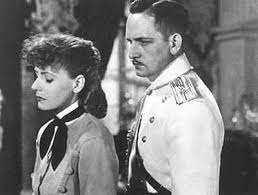
Greta Garbo retrospective - CAMILLE (1936)

CAMILLE is one of the many adaptations of Dumas Fils La Dame Aux Cameilias - the story that became La Boheme, Rent and Moulin Rouge. This version is directed by legendary Hollywood director George Cukor (THE PHILADELPHIA STORY, MY FAIR LADY) and stars Greta Garbo as the beautiful prostitute, Margeurite aka Camille. She is kept by a wealthy baron, but because of a mix-up, turns her attention to the dashing Armand Duval (Robert Taylor - QUO VADIS) and falls in love with him. She gives up her luxurious life to be with him, but after a harsh pragmatic conversation with Armand's father, (Lionel Barrymore - IT'S A WONDERFUL LIFE), decides to abandon Armand. She knows he might follow her, but decides to sacrifice their love to save him from a life with a courtesan, and one dying of tuberculosis no less. Initially angry and disaffected, eventually Armand pursues her and comes to realise her self-sacrifice. Finally, she dies of tuberculosis in his arms, after one of the most affecting and legendary scenes of romantic declaration in the history of cinema.

The movie feels lush and romantic at every level - it's every inch an Irving G Thalberg production from the glory days of MGM. The interiors are rich and detailed, the countryside setting beautiful, and Greta Garbo's sumptuous gowns by Adrian (THE PHILADELPHIA STORY) make Garbo look even more stunningly beautiful than usual. Her hard beauty is perfectly suited to playing the woman in love whom life has taught to be practical nonetheless. When she finally melts, it's all the more moving for knowing the real risks she faces in compromising her profession. Has there ever been an actress who could portray such nuanced and conflicting emotion, barely uttering a word? And when she speaks, the dialogue might seem soupy on the page, but my goodness, it gets a little dusty in the theatre in those final scenes.

CAMILLE is one of those rare things - a romantic tragedy that never feels manipulative or melodramatic - that has the sheen of a melodrama but communicates a genuine chemistry between the leads and makes us believe in their love. It is for that reason that this seventy year old film of an eighteenth century love story still feels fresh and still moves us.

CAMILLE was released in 1937. Garbo was nominated for the Best Actress Oscar but lost to Luise Rainer in THE GOOD EARTH.

Minggu, 21 November 2010

Greta Garbo retrospective - ANNA KARENINA (1935)

Anna Karenina is my favourite novel. There are novels that I think are better written, though not many, and those that I admire more. But Anna Karenina has my heart, and I read it typically twice a year. When you love a book so passionately - when you have visualised every scene and every character - it becomes incredibly hard to give another person's vision a fair viewing. And so, in general, I have avoided watching the many film and TV adaptations of the novel*. However, I have recently been rewatching a lot of Greta Garbo's films on my many train journeys to Paris, including her 1935 ANNA KARENINA directed by Clarence Brown.


Anna Karenina is a beautiful society woman who's love for her son compensates for her marriage to a staid and self-satisfied man.  She is pursued by the dashing Count Vronsky, and knowing what is at stake, refuses his advances at first. When she gives in she sacrifices her place in society and access to her son.  Worst of all, cut off from the air of society, Vronsky becomes clasustrophobic and Anna becomes insecure and paranoid with tragic consequences. This story is set against that of Anna's sister-in-law Kitty, who's heart is broken when Vronsky leaves her, but is courted by the fascinatingly ill-at-ease, philosophically mired aristocrat Levin.

This movie adaptation is just 95 minutes long and much is sacrificed to get the movie down. The story of Kitty and Levin is given very short shrift, as well as anything more dark and searching in Levin's philosophical quest. This is of particular pain to those who, like me, think that Levin is the true hero of the tale. When it comes to the story of Anna and Vronsky, Garbo is of course, perfectly cast. Her magisterial beauty makes Vronsky's reckless behaviour unsurprising, and her ability to play against that, and show deep vulnerability and doubt, is deeply affecting. It might be a cliché, but in the final scenes, when we see Anna in the extremity of suffering, one can't help thinking that only a silent movie heroine would know how to convey such complexity and depth of emotion as Garbo does.

I also rather like the direction. Brown was apparently Garbo's favourite director and he took her from silent films such as FLESH AND THE DEVIL into her first talking feature, ANNA CHRISTIE and beyond. Of what I'd seen of his earlier films, Brown was not a director with visual flair - rather leaving his camera static to observe a beautifully framed tableaux the better to fix our attention on Greta Garbo's face. But ANNA KARENINA starts with a tour-de-force scene in which he shows Count Vronsky in his element - at a lavish officer's dinner. It isn't a scene that exists in the novel, but perfectly captures the decadence of that era and the capacity for self-indulgence that Vronsky will display. It also foreshadows the tragedy that will occur when Vronsky is cut off from the oxygen of these society events. The officers are tucking in to luscious food, almost like unruly schoolchildren, and then, we realise, this has only been a starter! As they are called to dinner, the officers start singing and line up at a long banqueting table, richly laden with yet more luscious food. The camera tracks back slowly down the length of table, at food rather than officer height, and the effect is powerful and overwhelming. Truly brilliant film-making. This understanding of the fact that much of Russian high society at that time was about creating spectacle carries through into the first ball-room scene, in which a mazurka is staged. William Daniels photography is once again superb, and as we see high society indulging in emotional games in their lavish frocks, there is no mistaking that this is a David O Selznick film with all the MGM glitz and glamour that that entails.

So, there is much to like in ANNA KARENINA - Brown's visuals and Garbo's performance. But for me this can never quite be a great film because of the liberty taken with the text by screen writers Clemnece Dane and Salka Viertel (QUEEN CHRISTINA) and in particular the downplaying of Levin-Kitty as a counter-point to Anna-Vronsky. Doctor007 thinks I am being unfair on this point - and that the movie stands up perfectly well on its own terms. Maybe he is right, but I am far too enmeshed in the novel to be able to make that separation.

*Anglo-Saxon versions began with J Gordon Edwards' 1915 Anna starring Betty Nansen, Edward Jose and Richard Thornton; and Julien Duvivier's 1948 film, produced by Alexander Korda and starring Vivien Leigh as Anna, Ralph Richardson as Karenin, Kieron Moore as Vronsky with a score by Constant Lambert and a score by Cecil Beaton. More recently, Bernard Rose's 1997 Anna starring Sophie Marceau, Sean Bean, Alfred Molina, James Fox and Danny Huston.

Russian Anna's include Tatyana Lukashevich's 1953 version starring Anna Tarsova; Aleksandr Zarkhi's 1967 movie starring Tatyana Samoljlova as Anna; and Margarita Pilikhina's 1974 film, with Maya Plisetskaya as Anna and Alexander Godunov (Karl in DIE HARD) as Vronsky. German Anna's include Friedrich Zelnik's 1919 Anna starring Lya Mara and there are versions from France, Italy and Hungary from the silent era.

ANNA KARENINA played Venice 1935 where it won the Mussolini Cup for Best Foreign Film (shudder) and was released in 1935 and 1936.

Jumat, 05 November 2010

Pantheon movie of the month - ANNE OF THE THOUSAND DAYS (1969) - This year's girl

1969 was a year when Old Hollywood was being challenged by New Hollywood. Movies like MIDNIGHT COWBOY addressed sex openly, and featured protagonists that were unpalatable, urban and grimy. Movies like BUTCH CASSIDY AND THE SUNDANCE KID took well-worn genres and reworked them, infusing them with a modern sexual sensibility, strong female characters and ambiguity. THE PRIME OF MISS JEAN BRODIE is a movie so scabrous and seditious it still seems as sharp and tart today as it did then.

It might seem odd, then, that I am championing a movie which was a commercial failure, and while nominated for ten awards, remains comparably unloved and undiscussed - Charles Jarrott's debut feature ANNE OF THE THOUSAND DAYS. It is, in some ways, a deeply old-fashioned film: a lavish costume drama full filmed on location at no expense, filmed in cinemascope, and dripping with talent. It was produced by Hal Wallis at the end of a career that began in 1931, and went from silent flicks, to subversive noir, navigated the strictures of the Hays Code, and came out the other side. He'd done the greats in the old classic American style - THE MALTESE FALCON and CASABLANCA - morphed into a producer of Elvis' commercial hits - and still produced challenging genre pics - notably THE SONS OF KATIE ELDER and TRUE GRIT. He also had form when it came to challenging historical dramas - having produced the seminal Burton-O'Toole BECKET in 1964. Hal Wallis, then, knew what he was doing when he took on adapting Maxwell Anderson stage play for the screen. He wanted the big-budget lavish look of a commercial hit, but he also wanted an intellectually honest movie.

The film is yet another take on the story of Henry VIII and Anne Boleyn. It's a story that we are all familiar with, and have seen on screen many times: from the philosophical debate of A MAN FOR ALL SEASONS (one of my favourite films of all time); to the domestic soap opera of THE OTHER BOLEYN GIRL and television's THE TUDORS. Each production has its particular angle, but few face it as head on as ANNE OF THE THOUSAND DAYS and even fewer give us as strong a pairing as Richard Burton and Geneviève Bujold. And I realise that there is an irony here. Richard Burton apparently thought his is a weak performance and hated the film. I, however, think this is a great Burton performance! 

The film opens with Cromwell asking Henry VIII for his signature on Queen Anne's death certificate, convicted of adultery, witchcraft and incest. He is torn - is she really adulterous? Should he give her another chance to bear him a son? What is God's will? And so we move into Act One. Anne is at court, in love with Percy, but the King maliciously stops her marriage so that he can amuse himself with her. She refuses, genuinely in love with Percy, and painfully aware of how the King threw over her sister once he had had his way with her. In Act Two we see Anne move from genuine opposition to the King's advances to falling in love both with him as a man - an intellectual equal with whom she gains pleasure from sparring - and equally with power - his power, and her power over him. She is not a coquette - as in THE TUDORS and THE OTHER BOLEYN GIRL - but a clever girl who wants to protect her position, and not be used and rejected by her King. In the Third Act, Anne is undone. She produces a daughter and then a dead son. Henry's eye roams; Anne manoeuvres to protect Elizabeth's right to succeed him; both are undone by Cromwell. We never doubt that they love each other, but the marriage is unworkable. In the epilogue, we see the tragic consequences: Henry is given the freedom to marry Jane Seymour, but he knows he has been complict in killing the woman he loved and respected. Anne is, however, supreme, in the very final scene - it is her daughter who will reign after all.

Why do I love this film? First, because many a worse film survives thanks to the intrinsic fascination the world has with the story of Henry and Anne. Second, because the film decries the modern fashion to make Anne a capricious, manipulative woman who over-shot her place (curious misogyny that harks back to her original trial, and speaks volumes about the state of modern feminism). By contrast, Geneviève Bujold's Anne is clever, clever, clever. She is neither capricious nor manipulative. She understands the stakes, she knows the strength of her hand, and when she acts it is because she wants to protect herself from being used, and then to protect her daughter. She is rational, loving and prescient. She is, in short, the true hero of this film, and Bujold is equal to that portrayal at every turn. Th third reason why I love this film is for Burton's Henry. He is neither the arrogant boor of A MAN FOR ALL SEASONS nor the insufficiently-regal, easily-turned incompetent of THE OTHER BOLEYN GIRL. Rather, he feels fully formed, and for every vice there is a virtue. Yes, he is arrogant, but he also respects Anne's intelligence. Yes, he is lustful, be he is also loyal to Anne, and genuinely grieved at her death. He does what he does not from over-weaning pride, but because he desperately wants to preserve the Tudor dynasty.

Thus, to my mind, ANNE OF A THOUSAND DAYS is one of the most even-handed and fascinating of the many portrayals of Henry and Anne. Just see them in combat! It's a sheer intellectual joy. And for dignity, pathos and power, I defy you to give me a better valedictory speech than Bujold's Anne. Just watch her un-man Wolsey in Henry's eyes. This is bravura screen-writing and acting. And better still, it is the highlight in a film that features location work, a superb score, a solid supporting cast of British character actors, and Arthur Ibbetsen's camera-work.

ANNE OF THE THOUSANDS DAYS was released in 1969 and was nominated for ten Oscars. However, it only one Best Costumes. The strength of film-making that year - and the revolution sweeping Hollywod that would make big budget costume dramas seem old-hat, is shown by a quick survey of the films it lost to in the other categories: MIDNIGHT COWBOY, TRUE GRIT, THE PRIME OF MISS JEAN BRODIE, THEY SHOOT HORSES DON'T THEY, BUTCH CASSIDY AND THE SUNDANCE KID, HELLO DOLLY!
 

reiview movies and books Copyright © 2012 -- Powered by Blogger